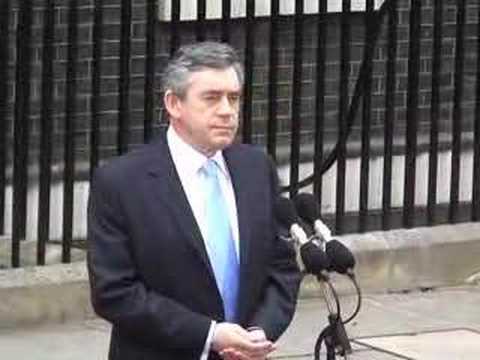
Gordon Brown becomes the Prime Minister
Appointment of the Prime Minister
9 min read
Updated By: History Editorial Network (HEN)
Published:
On June 27, 2007, Gordon Brown became the Prime Minister of the United Kingdom, succeeding Tony Blair. His premiership marked the culmination of a long political career within the Labour Party and was characterized by significant economic challenges and pivotal global events.
Gordon Brown was born on February 20, 1951, in Giffnock, Scotland. He was educated at the University of Edinburgh, where he earned a Ph.D. in History. Brown entered politics early, becoming an MP for Dunfermline East in 1983. Over the years, he established himself as a key figure within the Labour Party, known for his intellectual rigor and dedication to social justice.
Brown's partnership with Tony Blair was crucial to the modernization of the Labour Party, leading to the landslide victory in the 1997 general election. As Chancellor of the Exchequer from 1997 to 2007, Brown was instrumental in shaping the UK's economic policy. He presided over a period of sustained economic growth and implemented significant reforms, such as granting independence to the Bank of England and introducing tax credits to support working families.
The transition from Blair to Brown had been anticipated for years. Known for his ambition and vision for the country, Brown had often been seen as the intellectual driving force behind New Labour. When Blair announced his intention to step down in 2007, Brown emerged as the natural successor, winning the leadership of the Labour Party unopposed.
Brown’s tenure as Prime Minister began with a focus on domestic issues and a commitment to social justice. He prioritized education, healthcare, and addressing child poverty. However, his premiership was soon dominated by a series of crises that tested his leadership.
One of the first major challenges Brown faced was the global financial crisis of 2007-2008. The collapse of major financial institutions and the ensuing economic turmoil required swift and decisive action. Brown played a critical role in orchestrating the UK's response to the crisis, implementing a bank rescue package that involved the partial nationalization of several banks and injecting capital to stabilize the financial system. His actions were credited with helping to prevent a complete collapse of the UK banking sector.
Internationally, Brown was a key player in coordinating the global response to the financial crisis. He advocated for international cooperation and stimulus measures at the G20 summit in London in April 2009, which led to significant commitments from world leaders to support the global economy. Brown's efforts were widely recognized and praised for their impact on mitigating the worst effects of the crisis.
Despite his strong leadership during the financial crisis, Brown's premiership was marred by political challenges and declining popularity. The Labour Party faced internal divisions, and Brown struggled to connect with voters in the same way that Blair had. His reserved and serious demeanor, while respected, lacked the charismatic appeal that had characterized Blair's leadership.
The 2010 general election resulted in a hung parliament, with no party winning an outright majority. After days of negotiations, the Conservative Party, led by David Cameron, formed a coalition government with the Liberal Democrats. Brown announced his resignation as Prime Minister and Labour Party leader on May 11, 2010, paving the way for Cameron to take office.
Gordon Brown's legacy as Prime Minister is complex. He is remembered for his decisive action during the global financial crisis and his commitment to social justice. However, his tenure was also marked by political difficulties and a failure to secure a lasting mandate from the electorate. Brown returned to the backbenches after leaving office and continued to be an influential voice in public life, focusing on global issues such as education and international development.
Brown's time as Prime Minister underscored the unpredictable nature of political leadership and the profound impact of global events on national governance. His leadership during one of the most challenging economic periods in recent history remains a significant aspect of his legacy.
#MomentsOfLife #MoofLife_Moment #MoofLife #GordonBrown #UKPolitics #FinancialCrisis #LabourParty #BritishPrimeMinister
Primary Reference
Gordon Brown - Wikipedia
Explore the Life Moments of
 AI Twin