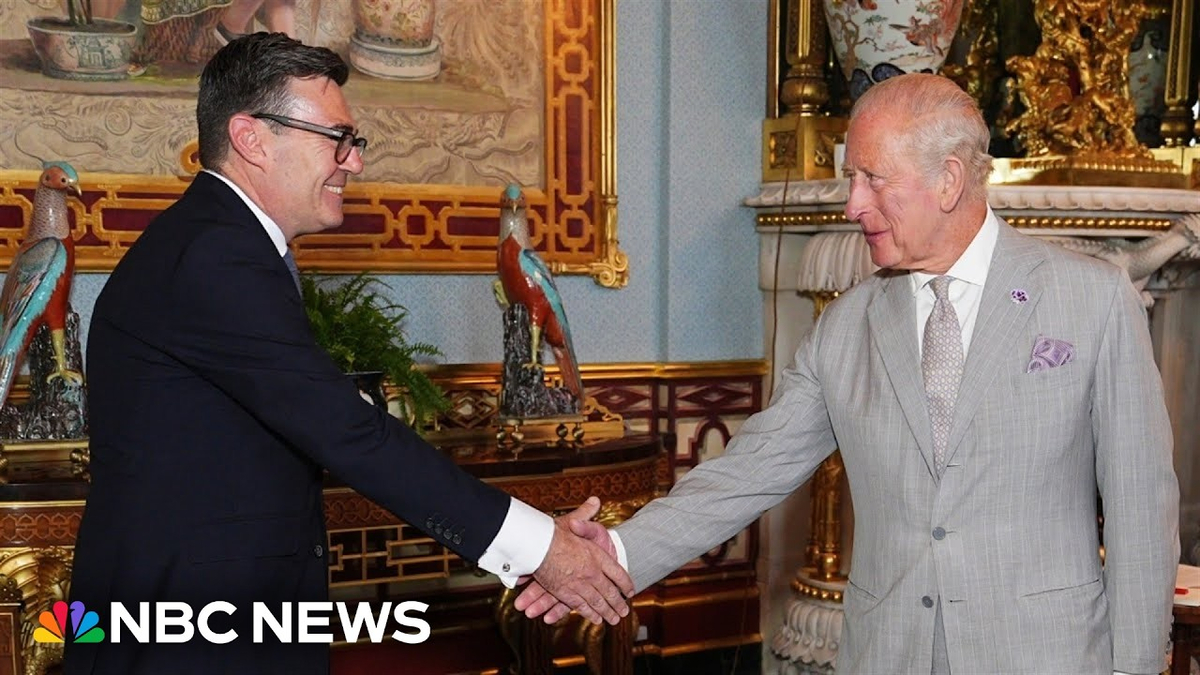
Andy Burnham Becomes Prime Minister of the United Kingdom
London, England, United Kingdom
Political
6 min read
Updated By: History Editorial Network (HEN)
Published:
On 20/07/2026, Andy Burnham was officially appointed Prime Minister of the United Kingdom by King Charles III after Keir Starmer resigned from office. Burnham, who had served as Mayor of Greater Manchester since 2017, became prime minister following his election as leader of the governing Labour Party. Under the UK's parliamentary system, a governing party can change its leader and prime minister without holding a general election. Burnham became the seventh British prime minister in a decade and the first prime minister to belong simultaneously to the Labour Party and the Co operative Party.
The transition began with Starmer delivering a farewell statement outside 10 Downing Street, where he reflected on his two years in office before travelling to Buckingham Palace to formally resign. Shortly afterward, Burnham met King Charles III, who invited him to form a new government. Following the audience, Burnham returned to Downing Street and delivered his first speech as prime minister, promising to serve as a "circuit breaker for British politics." He pledged to reshape the country's political and economic framework through a long term plan aimed at improving living standards, strengthening regional government, and restoring political stability after years of frequent leadership changes.
Burnham announced several immediate priorities, including a commitment to end rough sleeping in England. The Prime Minister's Office confirmed an additional £340 million over five years would be allocated from the housing department's existing budget to support homelessness initiatives. He also outlined plans to introduce early cost of living measures and continue work on devolving greater powers from Westminster to local and regional authorities, reflecting policies he had championed during his tenure in Greater Manchester.
Burnham unveiled a new cabinet shortly after taking office. In one of the most closely watched appointments, John Healey became Chancellor of the Exchequer, after former Chancellor Rachel Reeves confirmed she would not serve in the new government. Louise Haigh was appointed First Secretary of State, while other cabinet positions were reshaped as Burnham assembled his administration. The new prime minister also emphasized regional devolution, later establishing a "No. 10 North" office in Manchester to symbolize his commitment to distributing political and economic power more evenly across the United Kingdom.
Why This Moment Matters:
Andy Burnham's appointment marked the beginning of a new phase for the Labour government following an internal leadership transition rather than a general election. His administration placed regional devolution and constitutional reform at the center of its agenda, reflecting a shift toward redistributing decision making beyond Westminster while seeking to stabilize British politics after a decade of frequent changes in national leadership.
#AndyBurnham
#UnitedKingdom
#PrimeMinister
#UKPolitics
#LabourParty
#KingCharlesIII
#DowningStreet
Explore the Life Moments of
 AI Twin