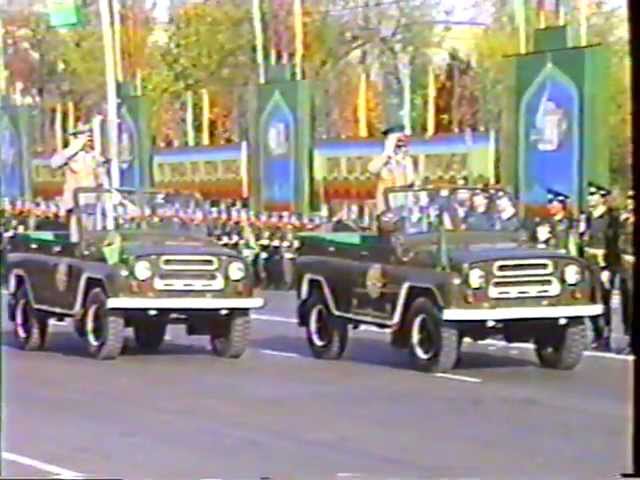
Independence Declaration from Soviet Union
Turkmenistan
Political
6 min read
Updated By: History Editorial Network (HEN)
Published:
In a pivotal shift on October 27, 1991, Turkmenistan became an independent country, separating itself from the Soviet Union. This transition marked the end of Turkmenistan's status as one of the 15 republics governed by the Soviet regime since 1925. The dissolution of the Soviet Union triggered a nationalistic surge across its member republics, with Turkmenistan seizing the opportunity to forge its path.
Before independence, Turkmenistan was largely under Soviet economic policies, which emphasized heavy industrialization and collective farming. This approach often neglected local needs and indigenous culture. The move towards independence was driven by growing dissatisfaction with the central Soviet leadership, rooted in years of political and economic grievances.
The independence declaration resulted in significant changes for Turkmenistan. One of the first tasks was to establish a constitution, which was ratified in 1992, laying the foundation for governance, law, and civil rights within the country. Furthermore, Turkmenistan sought international recognition and was quickly admitted as a member state of the United Nations, which provided a platform to engage with the global community.
Economically, the nation inherited significant natural resources, particularly natural gas. This resource became central to its economic planning and international trade strategy. Turkmenistan's government focused on building infrastructure to export gas to global markets, which was crucial for its economic development. It also allowed the country to establish itself as a key player in the energy sector.
Politically, the country implemented policies to consolidate power under the presidency, with Saparmurat Niyazov becoming the first president. Niyazov’s administration undertook efforts to promote cultural heritage and national identity, distancing itself from Russian influence. Educational reforms, language policies, and other cultural initiatives marked steps towards reinforcing Turkmen identity.
However, the centralized power structure also led to criticisms regarding human rights and freedom of expression. The government maintained tight control over political opposition and media, which drew concern from international observers about the state of democracy in Turkmenistan.
The moment of independence was a turning point that allowed Turkmenistan to navigate its future based on its cultural and economic priorities. The country embarked on a path of sovereignty and sought to balance maintaining national identity while integrating into the global economy.
#Independence #Turkmenistan #NationBuilding #Sovereignty #CulturalIdentity #EnergyEconomy #PoliticalChanges #UNMembership #MoofLife
Primary Reference
Turkmenistan (01/01)
Explore the Life Moments of
 AI Twin