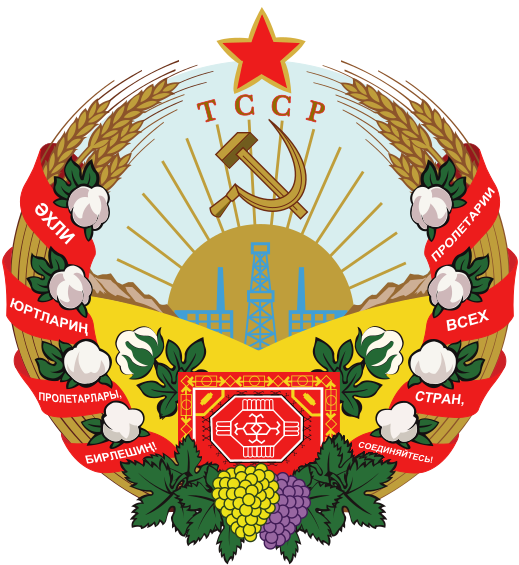
Establishment of Turkmen SSR in Soviet Union.
Turkmenistan
Political
EconomicReform
6 min read
Updated By: History Editorial Network (HEN)
Published:
In the early 20th century, the socio-political landscape of Central Asia experienced dramatic transformations. This period saw the reshaping of territories and the formation of new political entities within the Soviet Union. One key event during this time was the establishment of the Turkmen Soviet Socialist Republic (Turkmen SSR), which marked its incorporation as a republic of the Soviet Union.
Before the reorganization, the region known today as Turkmenistan was part of the larger Turkestan Autonomous Soviet Socialist Republic. The reconfiguration aimed to provide distinct national-territorial units to various ethnic groups within Central Asia. The establishment of the Turkmen SSR set the stage for increased Soviet influence and control over the region's resources and political institutions.
The nascent Turkmen SSR initially faced numerous challenges, including limited infrastructure, low literacy rates, and a predominantly agrarian economy. Soviet policies brought sweeping changes, including land reforms, collectivization, and efforts to develop industrial capabilities. Additionally, the Soviet government implemented education campaigns to increase literacy and ideological alignment with communist principles.
These developments had significant impacts on Turkmen society. While the emphasis on collectivization led to disruptions in traditional ways of life, it contributed to the mechanization of agriculture and the creation of state-run farms. Industrial projects initiated by the Soviet government began to modernize the region, although often at the expense of local customs and autonomy.
The administrative reorganization into the Turkmen SSR also aimed to foster a sense of national identity under the Soviet framework. This included the promotion of the Turkmen language and culture, albeit within the bounds of communist ideology. The formation of the Turkmen SSR exemplified the broader Soviet strategy of managing ethnic diversity through structured republics, thereby maintaining control over a vast and varied empire.
Although the Turkmen SSR existed within a highly controlled and centralized system, its formation was a pivotal moment in the historical trajectory of modern Turkmenistan. It laid the groundwork for the region's subsequent development and integration into the broader Soviet economic and political framework.
#MoofLife #TurkmenSSR #SovietHistory #CentralAsia #Turkmenistan #EconomicReform #SocialChange #PoliticalHistory
Primary Reference
Turkmen Soviet Socialist Republic - Wikipedia
Explore the Life Moments of
 AI Twin