Transition of Power in Turkmenistan: Ghaznavids Rise after Samanid Decline
Turkmenistan
Transitions
Military Strategy
6 min read
Updated By: History Editorial Network (HEN)
Published:
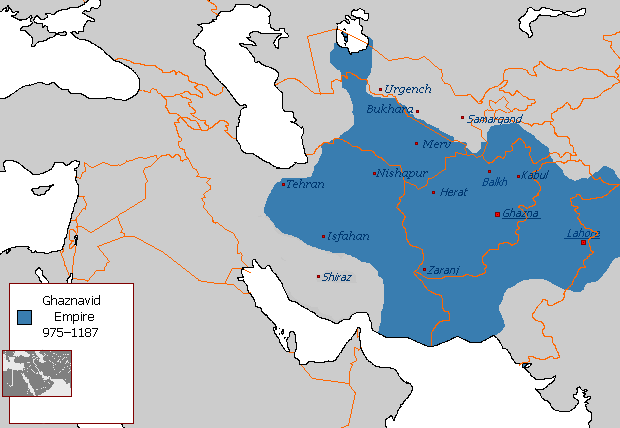
Following the continued weakening of the Samanid dynasty, the Ghaznavids emerged as a dominant power in the region, successfully taking control of Turkmenistan. The Samanid Empire, which had once maintained extensive territories and influence, faced internal strife, weakening its ability to govern effectively. Economic strain, administrative corruption, and military losses further contributed to its decline.
The Ghaznavids, originally a band of slave-soldiers within the Samanid military, capitalized on this decline. Led by Sabuktigin, an adept commander, the Ghaznavids consolidated power in Ghazni, a strategic city that served as the foundation of their expanding realm. As the Samanids struggled to maintain control, Sabuktigin and his successors recognized an opportunity to extend their influence into neighboring territories, including Turkmenistan.
This expansion was not a mere opportunistic conquest; it demonstrated the Ghaznavid's military prowess and their strategic acumen. By capturing key positions, the Ghaznavids established control over trade routes and agricultural land, thereby stabilizing and fortifying their burgeoning empire. This territorial gain facilitated the Ghaznavid's access to the Silk Road, enhancing their economic strength through trade.
The local population in Turkmenistan witnessed considerable shifts under Ghaznavid rule. Governance transitioned from a centralized Samanid administration to that of the Ghaznavids, who emphasized military structure and economic efficiency. The Ghaznavid's emphasis on administration and control brought a degree of stability, which was crucial for maintaining the agricultural and trade networks vital to the region's prosperity.
The change in rule also marked the continuation of Islamic culture and education. The Ghaznavids, who were great patrons of the arts and sciences, heavily invested in cultural pursuits, thereby furthering the dissemination of Islamic knowledge and literature throughout Turkmenistan. This period saw the construction of mosques, madrasas, and public works, which contributed positively to the socio-cultural fabric of the region.
The Ghaznavids' ascendancy in Turkmenistan is a reflection of the fluid dynamics of power during historical periods of transition. It underscores how military strength and strategic foresight can drive significant shifts in territorial control, impacting trade, governance, and cultural life.
#Ghaznavids #TurkmenistanHistory #SamanidDownfall #MilitaryStrategy #HistoricalTransitions #MoofLife
Primary Reference
https://www.lingexp.uni-tuebingen.de/z2/Morphology...

Explore the Life Moments of
 AI Twin