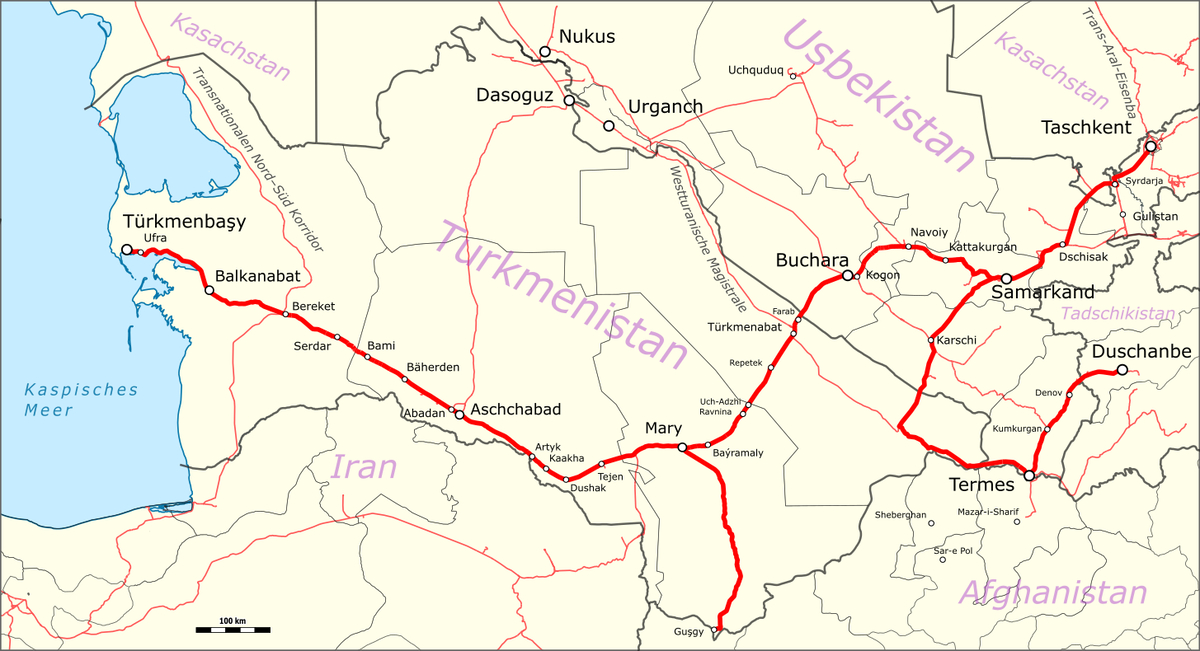
Establishing the Trans-Caspian Railway trifecta to Samarkand and Tashkent
Turkmenistan
Global Trade
Economic Growth
4 min read
Updated By: History Editorial Network (HEN)
Published:
Updated:
In the late 19th century, the construction of the first rail line in Turkmenistan marked a pivotal development in the region's infrastructure. The project was initiated as part of the broader Trans-Caspian Railway, a strategic endeavor by the Russian Empire aimed at strengthening its influence and fostering economic growth in Central Asia. The construction began from the eastern shore of the Caspian Sea and progressed eastward.
The railway extended to major cities, including Samarkand and Tashkent, significantly reducing travel time and facilitating the movement of goods and people. This development was instrumental in transforming the economic landscape of Turkmenistan and neighboring regions. It enabled more efficient transportation of cotton, a principal commodity, to Russian markets, contributing to economic integration.
The Trans-Caspian Railway also served military purposes, aiding Russian imperial forces in asserting control over Central Asia. The project required extensive labor, employing thousands of local workers and Russian engineers. Technological and logistical challenges were prevalent, given the harsh desert conditions and vast distances involved.
The successful completion of this railway segment laid the groundwork for further expansion into Central Asia, eventually linking with other major rail networks. It boosted urbanization, with new settlements and trade hubs emerging along the route. The railway's impact was far-reaching, enhancing connectivity and driving socio-economic development in the region.
#MoofLife #Turkmenistan #TransCaspianRailway #CentralAsia #InfrastructureDevelopment #EconomicGrowth
Primary Reference
USE OF THESES

Explore the Life Moments of
 AI Twin