Arab Conquest and Islamic Influence in Central Asia
Turkmenistan
Global Trade
Political
5 min read
Updated By: History Editorial Network (HEN)
Published:
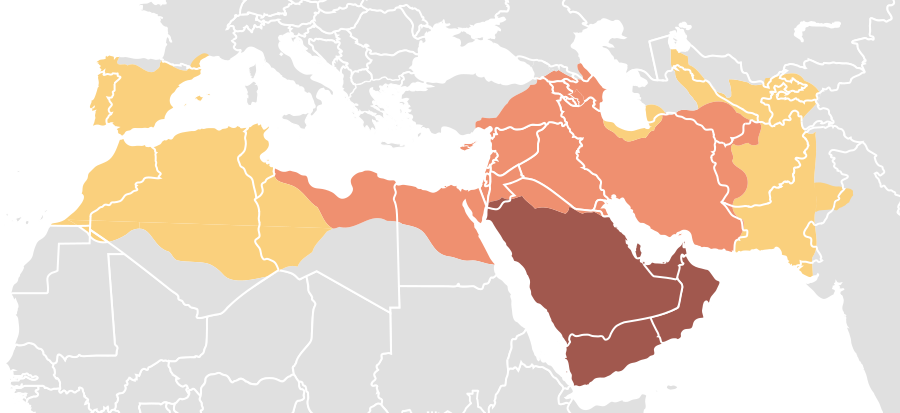
The Arab expansion into Central Asia marked a significant transformation in the region's geopolitical and cultural landscape. This period saw the Islamic Caliphate extending its control over vast territories, including those comprising modern-day Turkmenistan. Arab forces, driven by both religious fervor and strategic interests, began to engage with the Sogdian, Turkmen, and Persian peoples inhabiting these lands.
Merv, a vital city in present-day Turkmenistan, emerged as the capital of the Khorasan province under the Caliphate. Merv’s selection as the provincial capital underscored its strategic importance due to its position along the Silk Road and its role as a key trading and cultural hub. By becoming part of the Islamic Caliphate, Merv experienced a blend of administrative reforms, economic integration, and cultural exchanges that facilitated the spread of Islam and the Arabic language, as well as fostering connections between diverse regions.
The Caliphate's control over Central Asia introduced a new system of taxation, land distribution, and legal governance grounded in Islamic principles. These changes disrupted existing power structures but gradually led to increased stability and economic growth. Furthermore, the incorporation facilitated the spread of technologies, sciences, and literary traditions, contributing to the flourishing of Islamic Golden Age scholarship.
Statistically, the impact of Arab control is noted by the rise in the construction of mosques, madrasas, and other vital infrastructure in Merv and surrounding areas. The population in the region saw changes in their social and cultural practices, increasingly adopting Islamic teachings and aligning themselves with the broader Islamic world.
The Caliphate’s presence in Central Asia left a substantial legacy, as the integration into Islamic governance laid the foundations for future empires and shaped the religious and cultural identity of the region. The changes introduced during this era became a catalyst for the subsequent political evolutions and cultural developments that continued to influence the future of Turkmenistan and its neighboring regions.
This historical incorporation highlights the enduring influences of Islamic civilization in Central Asia.
#IslamicCaliphate #Merv #Khorasan #CentralAsia #Turkmenistan #SpreadOfIslam #EconomicGrowth #CulturalIntegration #MoofLife
Explore the Life Moments of
 AI Twin