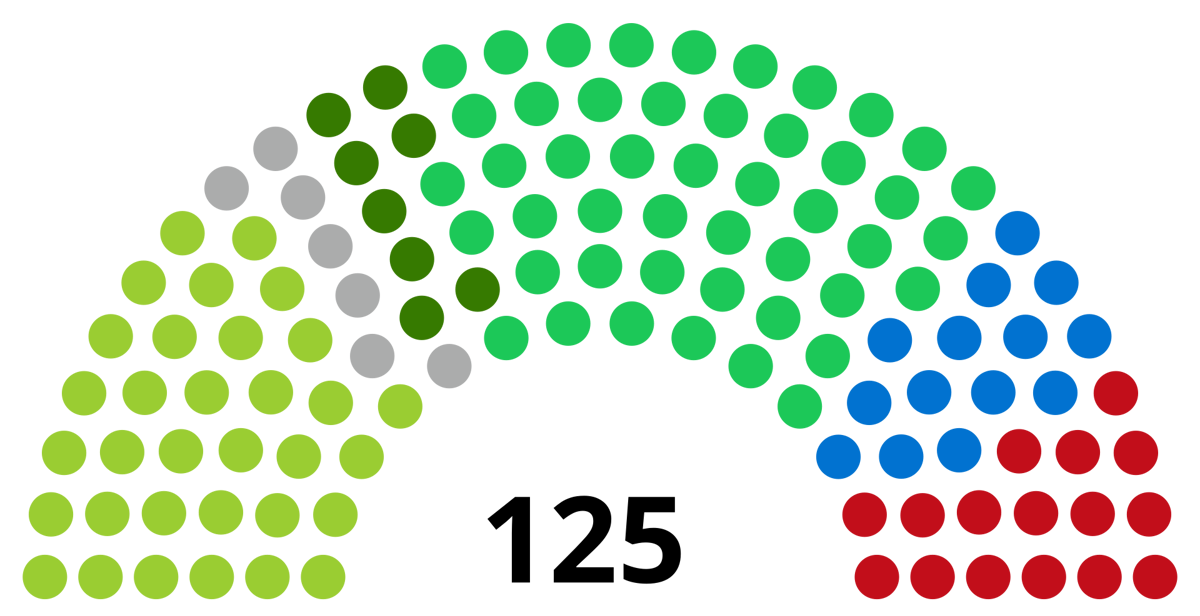
Controversy surrounds first multi-party parliamentary elections in Turkmenistan.
Turkmenistan
Political
Global Trade
5 min read
Updated By: History Editorial Network (HEN)
Published:
Updated:
The first multi-party parliamentary elections in Turkmenistan marked a pivotal shift from the single-party dominance that had characterized the nation's political landscape. Prior to this event, the Democratic Party of Turkmenistan had been the sole entity in control, enjoying unchallenged supremacy. This election introduced a façade of pluralism, intended to respond to international calls for democratic reforms. However, the outcome generated skepticism among observers and international bodies.
The participation of the Party of Industrialists and Entrepreneurs, ostensibly an independent entity, was a central feature of these elections. Despite this diversification, the ability to contest was scrutinized heavily. Reports indicated that candidates faced significant restrictions, and allegations were rampant of government influence over the electoral process. The Organization for Security and Cooperation in Europe (OSCE) and other international monitors observed several irregularities and a lack of transparency.
Voter turnout was reported at 91.3%, a figure that appeared unusually high and reminiscent of previous elections under a single-party system. Official results saw the Democratic Party maintaining a substantial majority, raising concerns about the effectiveness of introducing a second party. Critics argued that the multi-party framework was a superficial measure, lacking genuine competitive elements.
The impact of these elections was multifaceted. Domestically, it did little to change the power dynamics, with the Democratic Party's dominance continuing unabated. The international community, particularly Western governments and watchdog organizations, viewed the elections as an opportunity missed for true democratic progression. Analysts noted that while the elections were a nominal move towards political pluralism, significant challenges remained in achieving meaningful democratic governance.
The elections underscored the broader issues within Turkmenistan's political system, including centralized control, limited political freedom, and constraints on opposition. For future developments, the focus remained on implementing more substantial reforms to credibly reflect the democratic aspirations of the electorate.
#MoofLife #TurkmenistanElections #DemocraticReform #PoliticalPluralism #ElectionIntegrity
Primary Reference
2022 Country Reports on Human Rights Practices: Colombia
Explore the Life Moments of
 AI Twin