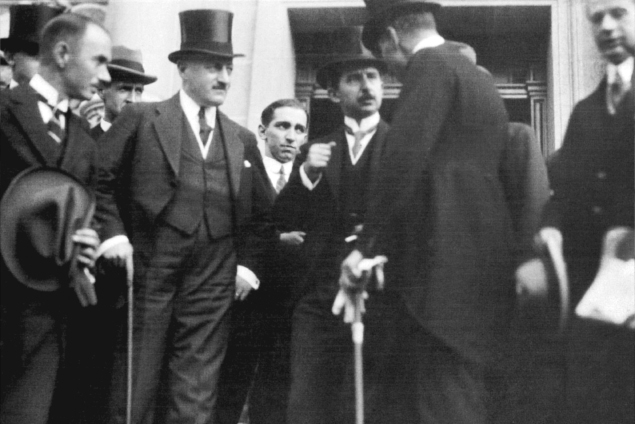
Establishment of the Republic with Treaty of Lausanne
Turkey

Political
4 min read
Updated By: History Editorial Network (HEN)
Published:
Following years of conflict and negotiations, the Treaty of Lausanne was signed, officially establishing the Republic of Turkey. The agreement marked the end of the Turkish War of Independence, where the Turkish people, under the leadership of Mustafa Kemal Atatürk, successfully fought against occupying forces and sought to establish an independent nation.
The Treaty of Lausanne not only recognized Turkey as a sovereign state but also set the country's modern borders. It replaced the earlier Treaty of Sèvres, which had aimed to dismember the Ottoman Empire. The new treaty ensured the territorial integrity of Turkey and laid the foundation for diplomatic recognition by the international community. The signing of this treaty was a significant moment in Turkish history, marking a turning point towards a new era of independence and self-determination.
The establishment of the Republic of Turkey following the Treaty of Lausanne brought about a series of reforms and modernization efforts under Atatürk's leadership. These reforms aimed at secularizing the state, promoting education, and transforming Turkish society into a modern nation-state. The legacy of the treaty and the subsequent reforms continues to shape modern Turkey and its place in the global community.
The signing of the Treaty of Lausanne was a crucial moment that solidified Turkey's status as an independent and sovereign nation, setting the stage for its development as a modern republic. The treaty's impact on Turkey's borders and diplomatic relations reverberates to this day, highlighting the enduring significance of this historic event. #TreatyofLausanne #RepublicofTurkey #MustafaKemalAtatürk #TurkishIndependence #ModernizationEfforts

Explore the Life Moments of
 AI Twin