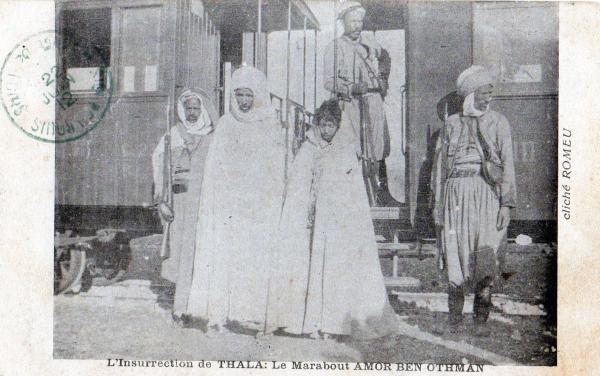
The 'Thala-Kasserine' Disturbances: The First Armed Resistance Against French Rule in Tunisia
Tunisia

Political
Colonial Resistance
10 min read
Updated By: History Editorial Network (HEN)
Published:
Updated:
The Thala-Kasserine Disturbances of April 1906 were a significant episode of unrest in western Tunisia, marking the first violent resistance against French authority since Tunisia became a French protectorate in 1881. This uprising was fueled by economic hardship, colonial land seizures, and religious fervor, culminating in violent attacks on European settlers and a deadly confrontation in Thala.
Background: Colonial Exploitation and Hardship
By 1906, French colonial policies had severely affected rural Tunisian populations. The Kasserine region, known for its nomadic and agricultural lifestyle, had been largely untouched by European land acquisitions due to its harsh terrain. However, even the limited European land takeovers (fewer than 10,000 hectares out of 933,000 total) disrupted the delicate balance of life for local Fraichich Bedouin tribes.
Key Factors Leading to the Revolt
Land Displacement & Colonial Expansion – European settlers took control of the most fertile lands, forcing Tunisian herders to pay fees for grazing on lands they had traditionally used for free.
Economic Hardship & Taxation – Poor harvests in 1904 and 1905 led to famine, while French authorities doubled taxes, pushing local populations into extreme poverty.
The Harsh Winter of 1905-1906 – Unprecedented snowfall (2.5 meters deep) in Thala (February 6–10, 1906) destroyed homes, killed thousands of livestock, and left many families on the brink of starvation. Despite this crisis, French authorities refused to provide aid or even supply seeds for replanting.
Religious Influence & the Role of a Marabout – Amor Ben Othman, an Algerian marabout (religious figure) from Souk Ahras, arrived in the region. Encouraged by local leader Ali Ben Mohammed Ben Salah, he preached supernatural protection against the French, fueling local frustrations into outright rebellion.
Events of April 26–27, 1906: The Revolt Begins
Attacks on French Settlers in Kasserine
On April 26, 1906, about 50 Fraichich Bedouins from the Ouled Néji, Gmata, Hnadra, and Hrakta subclans launched an attack on a French farm in Foussana, near Kasserine. Their first target was Lucien Salle, a French settler known for his brutality toward locals. However, Salle was absent, and instead:
His brother, Henri Salle, was shot and killed.
Their servant, Domenico Mira, was stabbed but survived by reciting the Shahada (Islamic declaration of faith).
Madame Salle, their mother, was killed in her bed.
Another servant, Tournier, was forcibly converted and circumcised.
The insurgents then attacked another farm owned by a settler named Bertrand, who had good relations with the local tribes. Here, most Europeans saved themselves by converting to Islam, except an Italian named Delrio, who refused and was killed and burned.
The Attack on Thala and French Retaliation
On April 27, 1906, the insurgents marched toward Thala, believing themselves invincible due to Amor Ben Othman’s religious prophecy. However, instead of an easy victory, they were met with heavily armed French settlers and Italian workers, who opened fire. Between 10 and 14 insurgents were killed, and the rest were captured or fled.
Amor Ben Othman and his followers were arrested without resistance.
All captured European prisoners were released.
The revolt was crushed within two days.
Legacy: A Prelude to the Tunisian Independence Movement
While the Thala-Kasserine revolt of 1906 failed to spark a broader rebellion, it was one of the first armed resistances against French rule in Tunisia. Its legacy includes:
The first direct violent challenge to French colonial authority.
An early sign of anti-colonial sentiment, foreshadowing Tunisia’s nationalist movements.
A shift in French policy, leading to increased education efforts and tighter security.
This uprising, though small in scale, reflected the growing unrest among Tunisian rural populations that would later contribute to the Tunisian independence movement, culminating in Tunisia’s independence from France in 1956.
The Thala-Kasserine Disturbances of 1906 were a direct consequence of colonial oppression, economic hardship, and religious influence. The brutal winter of 1905-06 acted as the final trigger, pushing desperate people to violence. While swiftly suppressed, the revolt signaled the first cracks in French colonial dominance in Tunisia, paving the way for future resistance.
#Tunisia #ThalaKasserine1906 #ColonialResistance #FrenchColonialism #TunisianHistory #MomentsOfLife #MoofLife_Moment #MoofLife
Primary Reference
Thala-Kasserine Disturbances

Explore the Life Moments of
 AI Twin