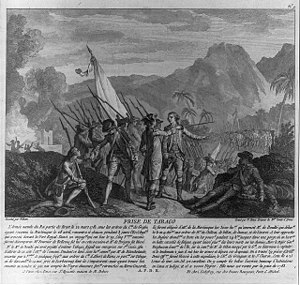
French Capture of Tobago During American War of Independence
Trinidad and Tobago
Political
Global Trade
3 min read
Updated By: History Editorial Network (HEN)
Published:
Updated:
During the American War of Independence, the island of Tobago, located in the Caribbean, became a strategic focal point due to its valuable resources and positioning. At the time, Tobago was under British control, along with neighboring Trinidad. France, allied with the American revolutionaries, sought to weaken British naval capabilities and disrupt their Caribbean colonies.
A well-coordinated French military campaign, utilizing both the navy and ground forces, targeted the island. The French forces launched a decisive naval blockade, cutting off British supplies and reinforcements. After a series of skirmishes and the effective use of artillery, French troops successfully landed on Tobago. The British garrison, outnumbered and facing dwindling resources, ultimately capitulated. This change in control of Tobago dealt a blow to British colonial power in the Caribbean.
The capture of Tobago by the French had significant implications. It bolstered French presence in the Caribbean, allowing them greater control over trade routes and resources. For the British, the loss symbolized a strategic setback, affecting their colonial dominance. This shift also impacted the local population, altering administrative and military control on the island.
#AmericanWarIndependence #FrenchMilitary #BritishColonial #CaribbeanHistory #NavalBlockade #MoofLife

Explore the Life Moments of
 AI Twin