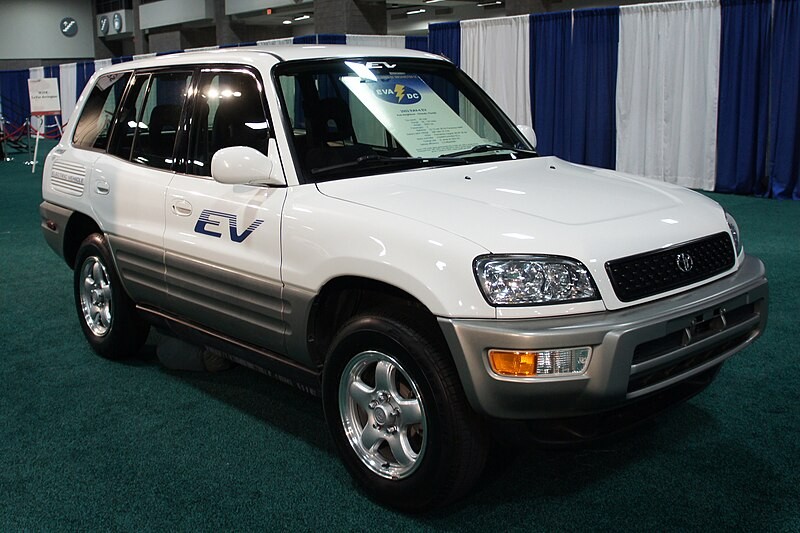
First Generation Toyota RAV4 EV
Japan
Automotive
Electric Vehicles
Environmental Compliance
4 min read
Updated By: History Editorial Network (HEN)
Published:
Updated:
The first generation Toyota RAV4 EV was developed as a response to California's mandate requiring automakers to offer zero-emissions vehicles. This initiative aimed to reduce air pollution and promote cleaner transportation options. The RAV4 EV was introduced during a period when environmental regulations were becoming increasingly stringent, pushing manufacturers to innovate in the electric vehicle sector. Toyota produced a total of 1,484 units of the RAV4 EV, which were primarily leased or sold in California between 1997 and 2003. The vehicle featured an electric powertrain, which was a significant step towards sustainable mobility, although it was primarily seen as a compliance vehicle rather than a mainstream product.
The production of the first generation RAV4 EV came to an end when California rescinded its zero-emissions vehicle mandate due to legal challenges from automakers. This decision reflected the complexities and challenges faced by the automotive industry in transitioning to electric vehicles. Despite its limited production, the RAV4 EV laid the groundwork for future electric vehicles and highlighted the potential for electric mobility. The subsequent development of a second generation RAV4 EV in collaboration with Tesla further emphasized the ongoing evolution of electric vehicles, showcasing advancements in battery technology and electric powertrains. The legacy of the first generation RAV4 EV continues to influence the electric vehicle market today, as manufacturers strive to meet growing consumer demand for sustainable transportation options.
#mooflife
#MomentOfLife
#ToyotaRav4Ev
#ElectricVehicles
#ZeroEmissions
#CaliforniaMandate
#SustainableTransportation

Explore the Life Moments of
 AI Twin