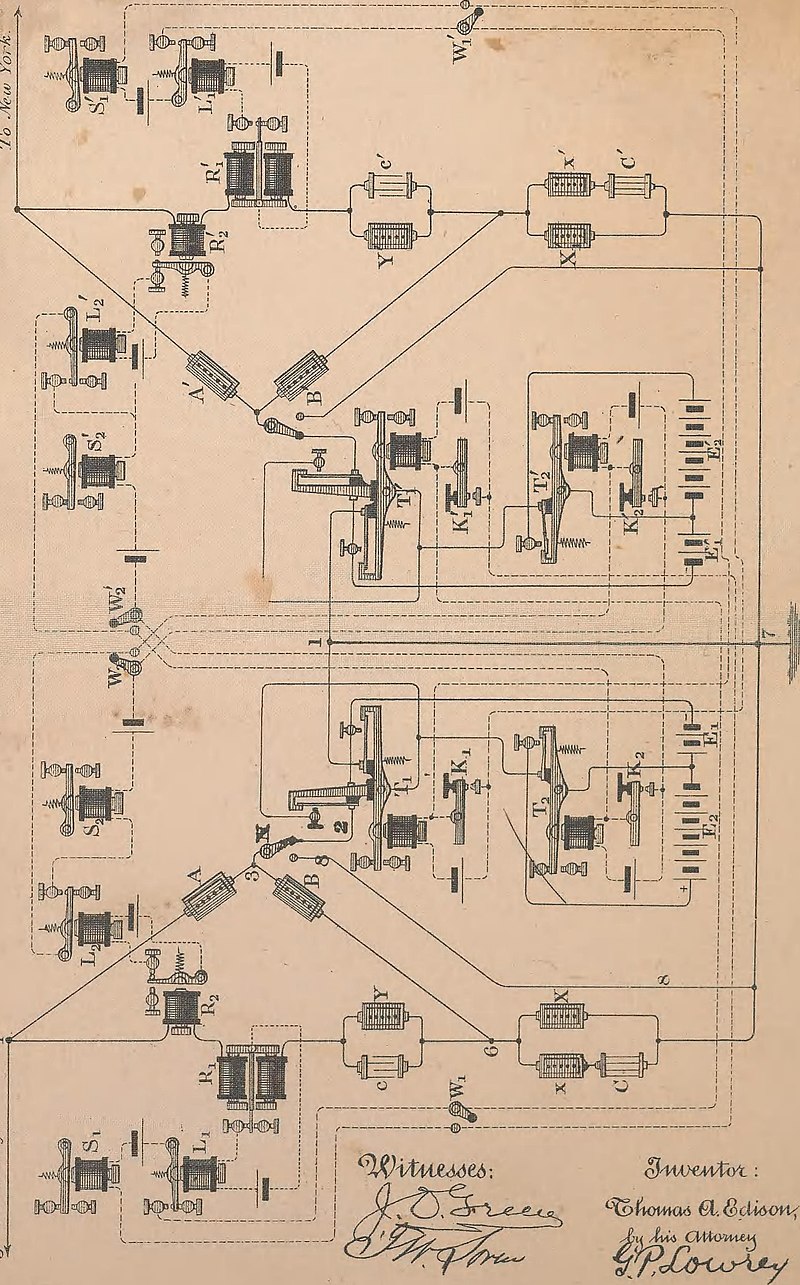
Thomas Edison's Quadruplex Telegraph Revolutionizes Communication Networks.
United States of America
Technology
Innovation
4 min read
Updated By: History Editorial Network (HEN)
Published:
Updated:
Thomas Edison initiated a transformative shift in telecommunications with his invention of the quadruplex telegraph system. The new system allowed for the simultaneous transmission of four separate messages over a single wire: two in each direction. Prior to this invention, telegraph systems were limited to a single message at a time. This technological advancement dramatically increased the efficiency and capacity of telegraph networks.
Telegraph companies, eager to expand the volume and speed of their message delivery, saw immense potential in Edison's innovation. Western Union, the largest telegraph company of the day, quickly adopted the quadruplex system to maximize their network's efficiency, resulting in significant cost savings and improved service. The quadruplex system facilitated faster communication across long distances, enhancing operational capabilities for businesses and news agencies, and contributing to the broader economic growth of the period.
Edison's quadruplex telegraph system underscored his ingenuity and forward-thinking approach to solving communication problems. By addressing the limitations of earlier telegraphy systems with a focus on practicality and efficiency, Edison cemented his position as a leading innovator. This invention not only benefited the telegraph industry but also laid groundwork for future developments in electrical communication.
Edison continued to innovate, leading to further advancements in various fields. His inventions and their implementation showed the importance of improving communication infrastructure, which played a critical role in connecting different parts of the nation and the world.
#EdisonInnovation #TelegraphRevolution #CommunicationBreakthrough #TechHistory #MoofLife
Primary Reference
Quadruplex Telegraph - Engineering and Technology History Wiki
Explore the Life Moments of
 AI Twin