Thomas Edison's Kinetograph: Revolutionizing Entertainment and Communication
United States of America
Technology
Entertainment
4 min read
Updated By: History Editorial Network (HEN)
Published:
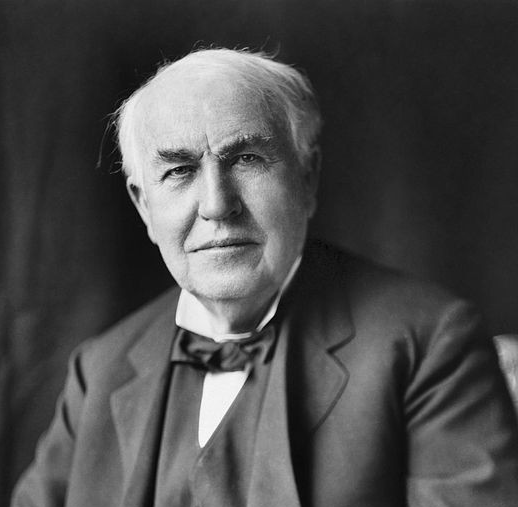
Thomas Edison, a prolific American inventor, was instrumental in the development of the motion picture camera. Prior to this invention, entertainment technology was limited to phonographs and static photography. Edison's work emerged from his collaboration with William Kennedy Laurie Dickson at the Edison Laboratory. They aimed to invent a device that could capture and project moving images.
The newly developed technology, named the Kinetograph, utilized a strip of perforated film to record sequences of images. This was coupled with the Kinetoscope, a device for viewing the recorded films. The invention allowed for the first-ever form of motion picture playback. Edison's pioneering work laid the foundation for the film industry, enabling the birth of cinemas.
The impact of the motion picture camera was profound. It spurred the creation of various forms of visual media, transforming both communication and entertainment. The technology quickly evolved, leading to the establishment of studios and production houses. The recorded motion pictures provided not just entertainment but also a medium for education, bringing distant events and places to audiences worldwide.
Edison's invention democratized information dissemination, providing a powerful tool for storytelling. Moreover, it contributed to the cultural and social development by enabling mass entertainment. The motion picture camera eventually paved the way for narrative films, documentaries, and newsreels.
Within a few decades, the film industry blossomed into one of the most influential cultural forces globally. The motion picture became a critical art form, influencing public opinion and reflecting societal changes.
#MoofLife
Explore the Life Moments of
 AI Twin