Fantasia Released Featuring Early Stereophonic Sound Experiment
United States
4 min read
Updated By: History Editorial Network (HEN)
Published:
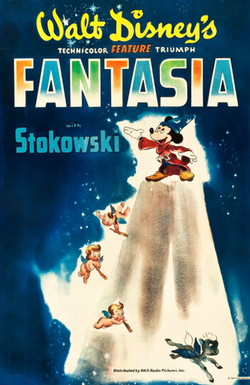
Fantasia premiered on 13/11/1940 at the Broadway Theatre in New York City, introducing audiences to an experimental animated film produced by Walt Disney that combined classical music with animated sequences. The film was notable for its use of “Fantasound,” an early stereophonic sound system developed specifically for the production in collaboration with RCA. This system allowed multiple audio channels and dynamic sound movement within the theater, making it one of the first commercial films to be exhibited with stereophonic sound.
The film consisted of eight animated segments set to pieces by composers including Johann Sebastian Bach, Ludwig van Beethoven, Pyotr Ilyich Tchaikovsky, Igor Stravinsky, and Modest Mussorgsky. Leopold Stokowski conducted the Philadelphia Orchestra, whose recordings formed the musical foundation of the film. One of the most recognized segments, The Sorcerer’s Apprentice, featured Mickey Mouse in a central role, helping to reintroduce the character to audiences at a time when his popularity had begun to decline.
Due to the technical requirements of Fantasound, Fantasia initially had a limited roadshow release, as only a small number of theaters were equipped to support the system. The production cost has been estimated at over $2 million, making it one of the most expensive films of its time. Although the film did not achieve immediate financial success during its initial release period, it was reissued multiple times in later decades, eventually gaining wider recognition and commercial returns.
#Fantasia #WaltDisney #AnimationHistory #FilmHistory #SoundInnovation
Primary Reference
Fantasia_(1940_film)

Explore the Life Moments of
 AI Twin