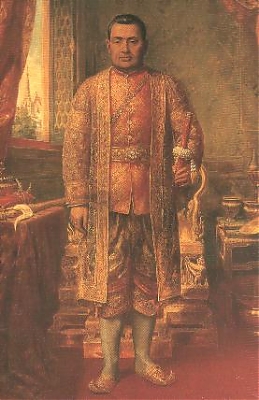
Thailand under the rule of King Rama III
Thailand

Political
4 min read
Updated By: History Editorial Network (HEN)
Published:
In the early 19th century, Thailand was under the rule of King Rama III, whose reign was marked by political instability and economic challenges. Dissatisfaction among the nobility and the people grew as the king's policies failed to address these issues.
During this time, Prince Anuwong, a powerful noble in the kingdom, saw an opportunity to challenge King Rama III's authority. He rallied support from other discontented nobles and led a rebellion known as the Siamese Revolution.
Prince Anuwong's rebellion aimed to overthrow King Rama III and establish himself as the new ruler of Thailand. Despite facing fierce opposition from the king's forces, Prince Anuwong's army fought fiercely, gaining control of several key cities.
However, the rebellion was short-lived as King Rama III's well-equipped army eventually defeated Prince Anuwong's forces. The prince was captured and faced harsh punishment for his treasonous actions.
The Siamese Revolution led by Prince Anuwong had a significant impact on the political landscape of Thailand. It highlighted the underlying tensions and power struggles within the kingdom's ruling elite. The rebellion also exposed the weaknesses in King Rama III's leadership and the need for reform in the government.
Overall, the Siamese Revolution was a failed attempt to challenge the established authority and bring about change in Thailand's monarchy. It serves as a reminder of the complexities of power dynamics and political unrest in the region during that period.
#SiameseRevolution #PrinceAnuwong #KingRamaIII #ThailandHistory

Explore the Life Moments of
 AI Twin