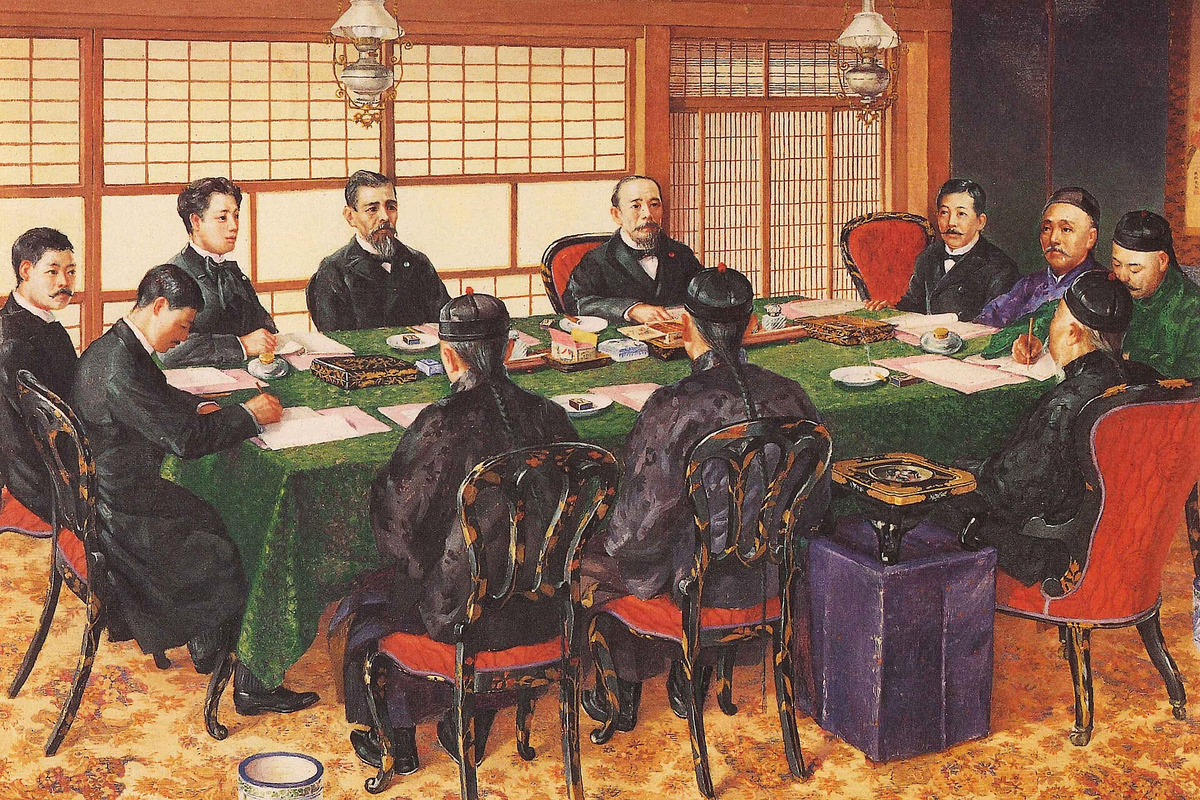
Signing of the Treaty of Shimonoseki
Taiwan
Historical Treaties
Sino-Japanese Relations
Colonial History
4 min read
Updated By: History Editorial Network (HEN)
Published:
Updated:
The Treaty of Shimonoseki marked a pivotal moment in East Asian history, resulting in the cession of Taiwan and the Penghu Islands to Japan. This treaty was a direct outcome of the First Sino-Japanese War, which was fought between China and Japan over influence in Korea. The signing of the treaty was influenced by Japan's Prime Minister Itō Hirobumi, who implemented a 'southern strategy' aimed at expanding Japanese territory and influence. The transfer of Taiwan to Japan initiated a period of Japanese colonial rule that would last for several decades, fundamentally altering the political and social landscape of the island. Under Japanese administration, Taiwan underwent significant changes, including infrastructure development and the introduction of modern education systems, although these were often accompanied by military suppression and efforts at cultural assimilation.
The impact of the Treaty of Shimonoseki extended beyond Taiwan, as it signified Japan's emergence as a major power in East Asia. The treaty not only marked the decline of Qing Dynasty influence but also set a precedent for future territorial disputes in the region. The cession of Taiwan was part of a broader pattern of imperial expansion by Japan, which would later lead to further conflicts in Asia. The legacy of Japanese rule in Taiwan remains a complex topic, with ongoing discussions about the effects of colonial policies on Taiwanese identity and society. The treaty and its consequences continue to influence Taiwan's political status and relations with both Japan and China.
#mooflife
#MomentOfLife
#TreatyOfShimonoseki
#TaiwanHistory
#JapaneseColonialRule
#FirstSino-japaneseWar
#EastAsiaRelations

Explore the Life Moments of
 AI Twin