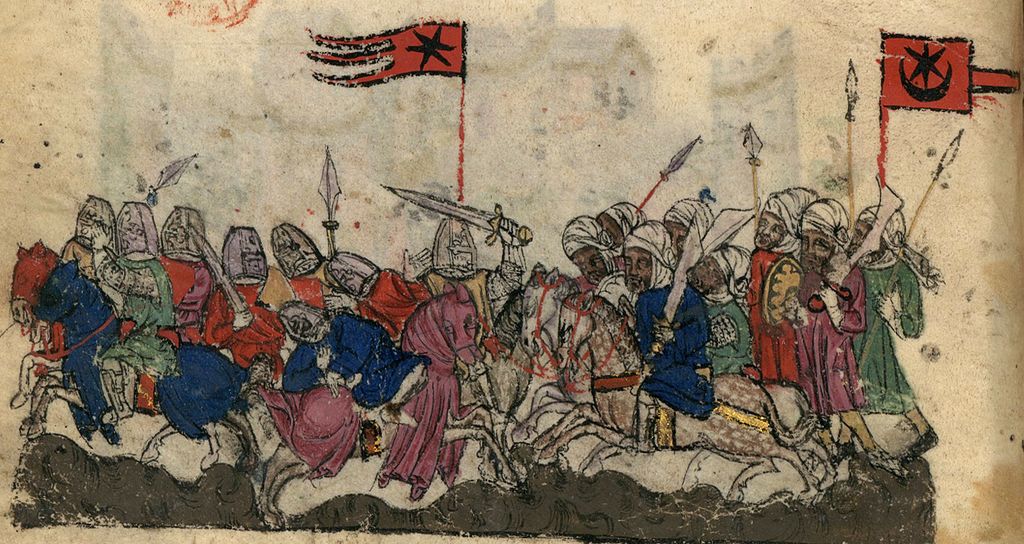
Muslims' victory in Battle of Yarmouk against Byzantines led to Syria's conquest.
Syria

Battles
Political
5 min read
Updated By: History Editorial Network (HEN)
Published:
Updated:
The Battle of Yarmouk marked a pivotal clash between the Muslim Arab forces and the Byzantine Empire and marked a decisive moment for the Muslim conquest of Syria. The battle unfolded near the Yarmouk River, which delineated the borders of several regions within the Byzantine Empire.
Before the confrontation, the Byzantine Empire was a formidable power, with a well-established military tradition and control over vast territories including Syria. The Muslim Arab forces, under the Rashidun Caliphate, sought to expand their influence and had already made significant inroads into various parts of the Byzantine realm.
The battle was characterized by a series of tactical maneuvers and engagements over several days, which showcased both strategic acumen and determination from both sides. The Byzantine forces, commanded by generals such as Vahan, were initially confident due to their numbers and the superiority of their heavy cavalry and infantry. However, the Muslim forces, commanded by Khalid ibn al-Walid, employed effective tactics such as feigned retreats and coordinated attacks, which gradually wore down the Byzantine defenders.
One notable aspect of the conflict was the unity and discipline within the Muslim ranks, which allowed them to counter the more heavily armored Byzantine soldiers. The exact numbers in terms of soldiers on each side are not definitively known, but historical records suggest that the Byzantines outnumbered the Muslim forces. Despite this, the resourcefulness and adaptability of the Muslim commanders were critical in securing a victory.
The outcome of the Battle of Yarmouk had far-reaching consequences. The Byzantine Empire suffered a significant blow, leading to their diminished influence in the region. For the Muslim Arab forces, the victory paved the way for further conquests, ultimately leading to the incorporation of Syria into the Rashidun Caliphate. This altered the region's political landscape and facilitated the spread of Islam.
The impact of the battle goes beyond territorial changes. It marked the beginning of a new era of dominance for the Muslim Arab forces in the region and reshaped cultural and socio-political dynamics within Syria and beyond.
#SyriaConquest #ByzantineEmpire #IslamicExpansion #HistoricalBattles #MoofLife
Primary Reference
This day in History - Supanet

Explore the Life Moments of
 AI Twin