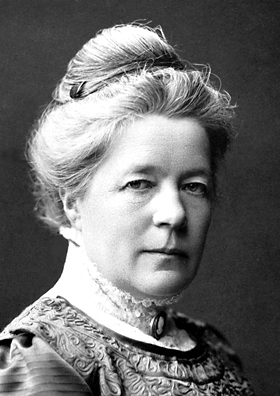
Selma Lagerlöf is the first woman to win a Nobel Prize in Literature.
Sweden

7 min read
Updated By: History Editorial Network (HEN)
Published:
Updated:
Selma Lagerlöf, a Swedish author, made history in 1909 by becoming the first woman to receive the Nobel Prize in Literature. Her groundbreaking achievement not only highlighted her exceptional literary talents but also marked a significant milestone for women in literature and the broader fight for gender equality.
Born on November 20, 1858, in Mårbacka, Värmland, Sweden, Lagerlöf was immersed in storytelling from an early age, often entertained by the folk tales recounted by her grandmother. Despite facing physical challenges due to a hip injury and societal limitations placed on women, Lagerlöf pursued education and trained as a teacher, a profession that would support her while she honed her writing skills.
Lagerlöf’s literary career began to flourish with the publication of her first novel, "Gösta Berlings Saga," in 1891. Set in her native Värmland, the novel blends realism with mythic and supernatural elements, creating a rich tapestry of Swedish culture and landscape. The book was initially met with mixed reviews but eventually gained critical acclaim and solidified Lagerlöf’s reputation as a gifted storyteller.
Her works are characterized by their imaginative narrative style, deep connection to Swedish folklore, and exploration of moral and philosophical themes. "The Wonderful Adventures of Nils," published in 1906-1907, is another seminal work that showcased her narrative prowess. Originally written as a geography textbook for Swedish schoolchildren, the story of Nils Holgersson's transformative journey across Sweden became an instant classic, beloved for its blend of educational content and enchanting storytelling.
Lagerlöf’s receipt of the Nobel Prize in 1909 was a landmark event. The Nobel Committee cited her "lofty idealism, vivid imagination, and spiritual perception" as reasons for awarding her the prestigious prize. Her win was not only a personal triumph but also a significant moment for women writers globally, serving as an inspiration for future generations.
Beyond her literary contributions, Lagerlöf was an advocate for social and political causes. She supported the women's suffrage movement in Sweden and used her influence to champion women's rights. Her legacy extends beyond her written work, as she remains a symbol of perseverance and the power of storytelling.
Selma Lagerlöf continued to write and publish until her death on March 16, 1940. Her body of work remains a cornerstone of Swedish literature, and her impact on world literature is immeasurable. She paved the way for women writers to be recognized and respected in a field traditionally dominated by men.
Lagerlöf's achievement in winning the Nobel Prize in Literature underscored the importance of diverse voices in literature and demonstrated the universal appeal and enduring power of storytelling. Her stories, filled with magical realism and deeply rooted in her cultural heritage, continue to resonate with readers worldwide.
#SelmaLagerlöf #NobelPrize #Literature #WomenInLiterature #SwedishLiterature #MomentsOfLife #MoofLife_Moment #MoofLife

Explore the Life Moments of
 AI Twin