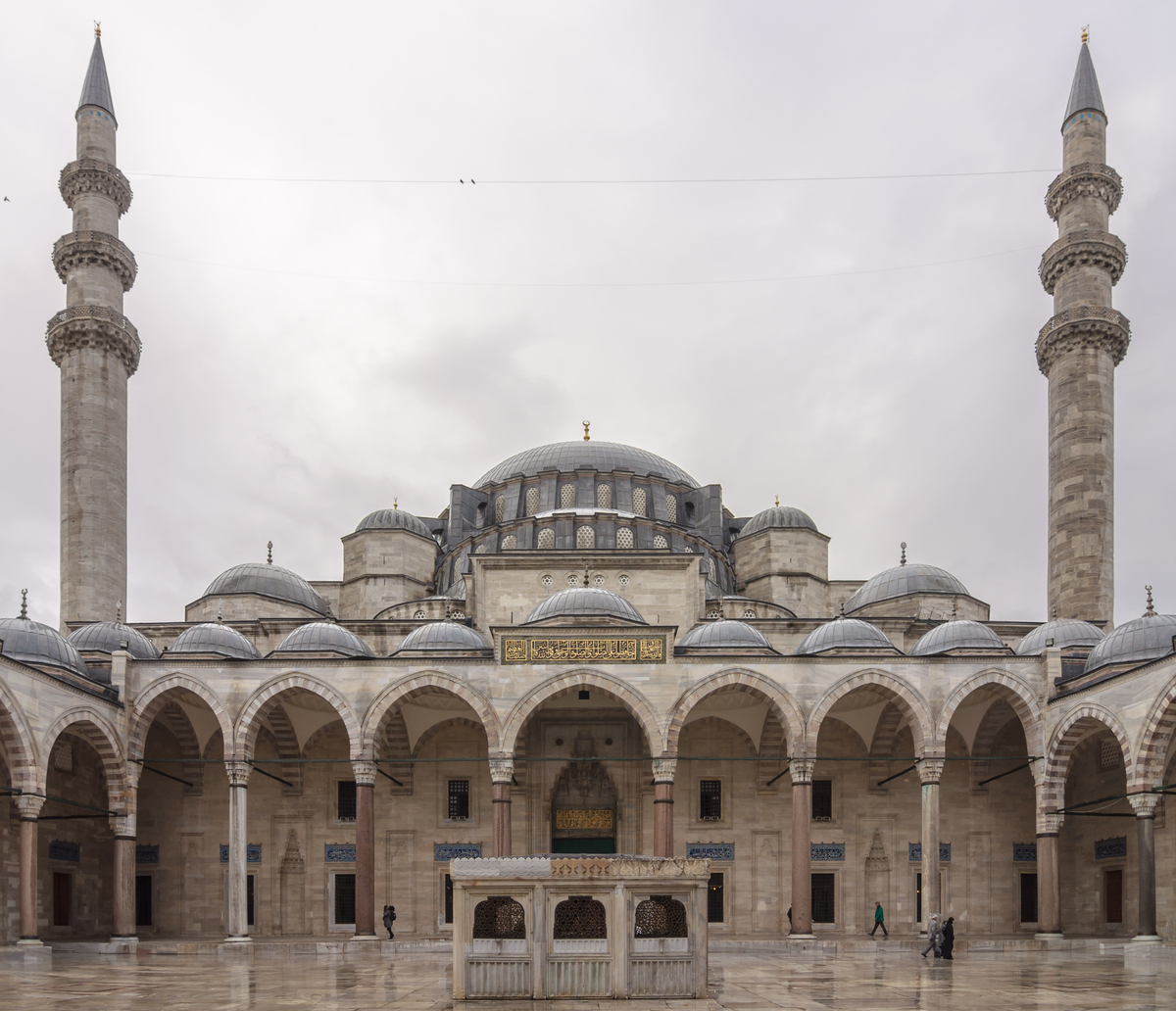
Construction of Süleymaniye Mosque by Mimar Sinan showcases Ottoman architectural excellence and innovation.
Turkey
Architecture
5 min read
Updated By: History Editorial Network (HEN)
Published:
As construction commenced on the Süleymaniye Mosque in Constantinople, Mimar Sinan, the chief Ottoman architect, initiated a project that would mark a pivotal point in the Islamic architectural landscape. Commissioned by Sultan Suleiman the Magnificent, the mosque aimed to reflect the grandeur and glory of the Ottoman Empire.
Located on the Third Hill of Constantinople, the site was meticulously chosen for its prominence and visibility across the city. Sinan, already recognized for his architectural prowess, utilized ingenious engineering techniques and an advanced understanding of spatial dynamics. The mosque complex included not only the main prayer hall but also a series of ancillary buildings such as a hospital, a madrasa, a library, and a bathhouse. This multi-functional design emphasized the mosque's role as a community hub.
Financial resources for the project were abundant, derived from the state's coffers and possibly waqf (charitable endowments) established by wealthy patrons. Thousands of workers participated, employing a diverse mix of materials sourced from across the empire, such as marble from Anatolia and granite from Egypt. The construction process mirrored the administrative efficiency and logistical organization of the Ottoman state.
Upon completion, the Süleymaniye Mosque stood as a testament to the empire's architectural innovation and cultural sophistication. Architecturally, it was significant for its massive dome, which ingeniously distributed weight and created an expansive, open interior space. The interior was adorned with intricate Iznik tiles and extensive calligraphic decorations, which were typical of Ottoman artistry.
The mosque not only served as a place of worship but also as a symbol of the Ottoman Sultanate's power, religious dedication, and cultural patronage. It became a center for learning and social services, exemplifying the state's role in welfare provision. Over time, it has drawn countless scholars, travelers, and tourists, contributing significantly to Constantinople's historical and cultural heritage.
The Süleymaniye Mosque today remains one of Istanbul's most iconic landmarks, representing a blend of aesthetics, functionality, and spiritual importance, reflective of the era in which it was built and of the empire's enduring legacy.
#MoofLife #Architecture #OttomanEmpire #SuleimanTheMagnificent #CulturalHeritage #MimarSinan #HistoricalLandmarks
Explore the Life Moments of
 AI Twin