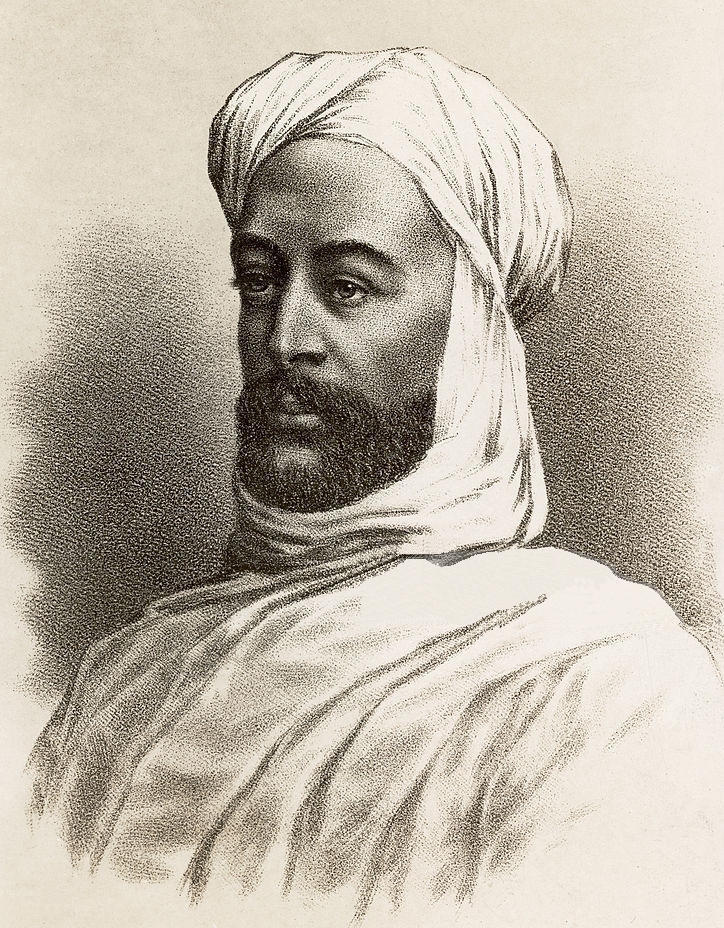
Muhammad Ahmad becomes Mahdi in Sudan
Sudan
Political
Religious
5 min read
Updated By: History Editorial Network (HEN)
Published:
Muhammad Ahmad declared himself the Mahdi of Sudan. Raised in Sudanese society shaped by Islamic traditions, Ahmad was well-versed in religious teachings. He had spent years training as a carpenter while gaining knowledge in Islamic jurisprudence and Sufism. His claim came at a time of significant social and political unrest, marked by discontentment with the Turco-Egyptian administration that ruled Sudan.
The announcement by Ahmad mobilized a broad spectrum of Sudanese society. His assertion of being the Mahdi, an Islamic messianic figure, resonated deeply with those who were disillusioned by the oppressive and exploitative practices of the governing authorities. These practices included heavy taxation, forced labor, and exploitative trade practices. The socio-economic hardships faced by the Sudanese people amplified their support for a unifying cause that promised justice and the establishment of a righteous Islamic state.
Ahmad's movement rapidly gained momentum, attracting thousands of followers known as the Ansar. They shared a unified goal of overthrowing the Turco-Egyptian rule. Ahmad's religious authority provided legitimacy to the cause, and his leadership galvanized a powerful resistance. This uprising marked the beginning of what would be a significant challenge to the established order in Sudan.
The ensuing conflict had notable implications. The Mahdist forces achieved a series of victories against the Turco-Egyptian troops, expanding their control over large parts of Sudan. The movement not only aimed at political change but also sought to implement social reforms based on Islamic principles, creating new administrative structures.
Key figures, including the British general Charles Gordon, came into the spotlight as the foreign powers took an interest in the unfolding events. The Mahdist movement continued to exert influence, affecting the geopolitical landscape of the region. These dynamics underscored the broader struggle for autonomy and self-determination against imperial and colonial forces.
The emergence of Muhammad Ahmad as the Mahdi was a pivotal development, catalyzing a national resistance movement that left a lasting impact on Sudanese history. The Mahdist uprising reshaped the socio-political fabric of the region, setting the stage for future conflicts and changes in Sudan.
#MahdiOfSudan #MuhammadAhmad #SudaneseHistory #IslamicMovements #ColonialResistance #MoofLife

Explore the Life Moments of
 AI Twin