Great Mahdist Siege: Khartoum Under Attack for 10 Months
Sudan
Event
Colonial
5 min read
Updated By: History Editorial Network (HEN)
Published:
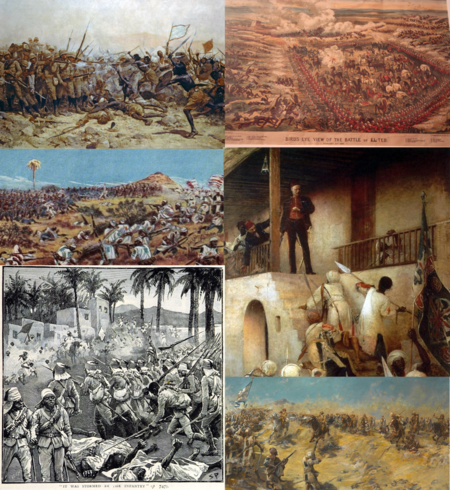
The initiation of the Siege of Khartoum marked a pivotal moment in Sudanese history. British-Egyptian forces were pitted against the Mahdist forces, led by Muhammad Ahmad, known as the Mahdi, who claimed to be the prophesied redeemer of Islam. The Mahdist movement sought to overthrow Ottoman-Egyptian rulers and establish an Islamic state.
Khartoum, situated at the confluence of the Blue and White Nile, was the administrative center and a strategic node for controlling Sudan. Its defense was critical to maintaining British-Egyptian authority in the region. General Charles Gordon, a British army officer and governor-general of Sudan, was tasked with orchestrating the city's defense. With its fortifications and supply lines well-established, Khartoum seemed prepared for a prolonged conflict.
However, the Mahdist forces, numbering in the tens of thousands, besieged the city with rigorous determination. The siege led to severe shortages of food and medical supplies among Khartoum's defenders and residents, contributing to deteriorating conditions within the city walls. The Mahdist forces gradually tightened their grip, cutting off any potential routes for supplies or reinforcements.
Repeated appeals for reinforcements from Britain were delayed, exacerbating the situation. The British government's hesitation was partly due to the complexities of its colonial policies and partly due to political considerations back in Britain. Public opinion was divided about the necessity and justification of intervening in Sudan.
After enduring approximately 10 months of relentless siege, the defenses of Khartoum faltered. The Mahdist forces breached the city, leading to its fall. General Gordon was killed in the ensuing chaos, and the Mahdists established control over Khartoum. The fall of Khartoum had significant implications, reflecting the Mahdist uprising's potency and the challenges faced by colonial powers in maintaining control over distant territories.
The siege underscored the complexities of colonial dominion, indigenous resistance, and the often-devastating human cost of conflict. The immediate aftermath saw the consolidation of Mahdist power in Sudan, which persisted until the eventual reconquest by British forces years later.
#KhartoumSiege #ColonialHistory #MahdistWar #SudanConflict #HistoricalEvent #MoofLife

Explore the Life Moments of
 AI Twin