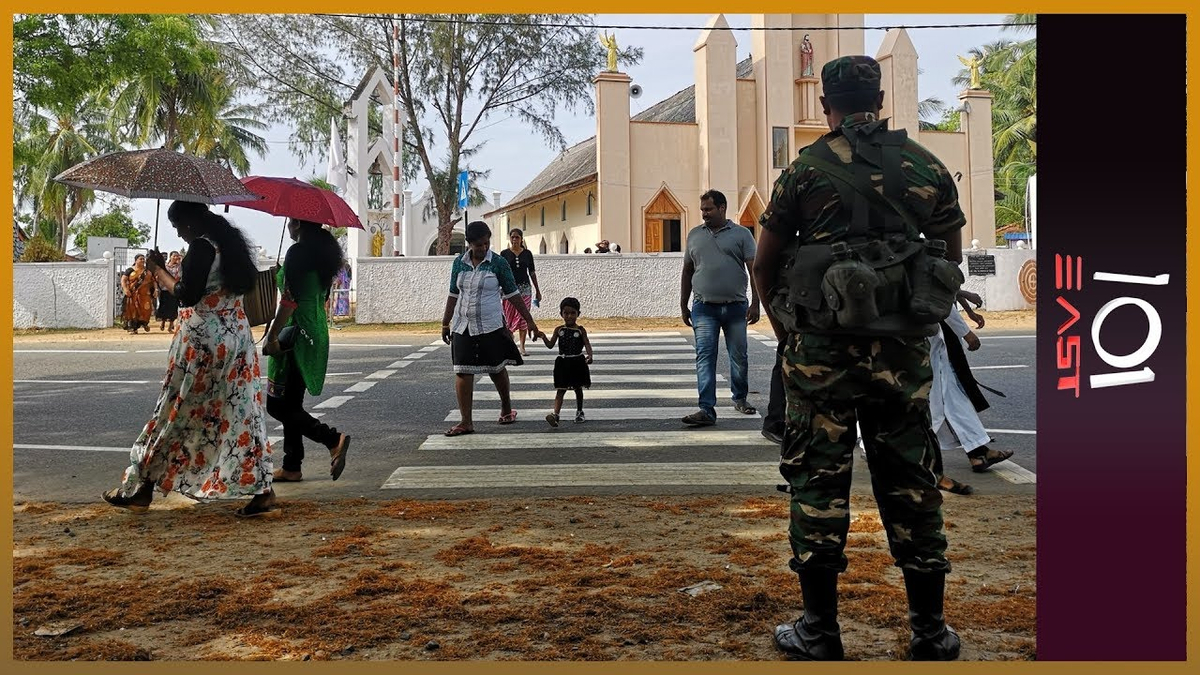
Terrorist Attack Leaves 269 Dead
Sri Lanka

Terrorist Attack
10 min read
Updated By: History Editorial Network (HEN)
Published:
On April 21, 2019, Sri Lanka was struck by one of the deadliest terrorist attacks in its history when a series of coordinated bombings targeted churches and luxury hotels across the country. The attacks, which occurred on Easter Sunday, were carried out by Islamic militants and resulted in the deaths of 269 people, including many worshippers and tourists, and injured over 500 others. This tragic event shocked the nation and the world, marking a dark chapter in Sri Lanka’s post-civil war history.
The Attacks: A Coordinated Strike
The bombings took place in three cities: Colombo, Negombo, and Batticaloa. The targets included:
Churches:
St. Anthony’s Shrine in Colombo: A historic Catholic church located in the capital, which was packed with Easter Sunday worshippers at the time of the attack.
St. Sebastian’s Church in Negombo: Another Catholic church where a large number of people had gathered for Easter services.
Zion Church in Batticaloa: A Protestant church located in the eastern part of the country, also attacked during the Easter service.
Hotels:
The Shangri-La, Colombo: A luxury hotel that was targeted during the busy breakfast period.
The Kingsbury, Colombo: Another high-end hotel in the capital.
The Cinnamon Grand, Colombo: One of the city’s most prominent hotels, also hit during breakfast time.
The bombings were carried out by suicide bombers who detonated their explosives in quick succession. The attacks were meticulously planned to cause maximum casualties and target locations where large gatherings of people were expected. The fact that the bombings occurred on Easter Sunday, one of the most significant days in the Christian calendar, added to the horror and symbolism of the attacks.
Perpetrators and Motivations
In the immediate aftermath, it was unclear who was responsible for the attacks. However, investigations quickly pointed to local Islamist extremist groups. The Sri Lankan government later identified the National Thowheeth Jama'ath (NTJ), a relatively obscure local jihadist group, as the main organization behind the bombings. It was revealed that the NTJ had ties to the Islamic State (ISIS), which later claimed responsibility for the attacks, stating that they were carried out in retaliation for the mass shooting at mosques in Christchurch, New Zealand, in March 2019.
The attackers were mostly young Sri Lankan Muslims, many of whom were well-educated and from affluent backgrounds, a fact that shocked many both in Sri Lanka and abroad. The group’s leader, Zahran Hashim, was among the suicide bombers and was identified as the mastermind behind the attacks.
Impact on Sri Lanka
The Easter Sunday bombings had a profound impact on Sri Lanka, a country that had been enjoying a decade of relative peace following the end of its brutal civil war in 2009. The attacks shattered the sense of security that had gradually returned to the island and exposed deep vulnerabilities in the country’s security apparatus.
The Sri Lankan government faced intense criticism for failing to act on multiple intelligence warnings that had been received in the days leading up to the attacks. These warnings, which included specific information about potential targets, were reportedly not adequately shared among security agencies, leading to a catastrophic failure to prevent the bombings.
In the wake of the attacks, the Sri Lankan government declared a state of emergency, imposed curfews, and launched a massive security crackdown, detaining hundreds of suspects and conducting widespread raids. Social media platforms were temporarily blocked to prevent the spread of misinformation and potential incitement to violence.
The attacks also led to a rise in communal tensions between the Muslim minority and the majority Sinhalese and Tamil populations. There were reports of retaliatory attacks on Muslim-owned businesses and mosques in the days following the bombings, prompting fears of further unrest.
International Response and Solidarity
The international community reacted with shock and condemnation to the Easter Sunday bombings. World leaders expressed their condolences and offered support to Sri Lanka. The United Nations, the European Union, and numerous countries, including India, the United States, and the United Kingdom, condemned the attacks and pledged to assist Sri Lanka in its counterterrorism efforts.
Global religious leaders, including Pope Francis, expressed their sorrow and solidarity with the victims and the people of Sri Lanka. The bombings were widely recognized as an attack not only on Sri Lanka but on religious freedom and the right to worship peacefully.
Legacy and Ongoing Challenges
The Easter Sunday attacks had a lasting impact on Sri Lanka's national psyche and its approach to security. The government has since taken steps to reform its intelligence and security operations, aiming to prevent similar attacks in the future. However, the bombings also exposed deep-seated issues within Sri Lankan society, including religious and ethnic tensions that continue to simmer beneath the surface.
For the victims and their families, the attacks were a devastating tragedy that left a lasting scar on the nation. Memorials and vigils have been held annually to honor the lives lost, and the event serves as a somber reminder of the dangers of extremism and the importance of vigilance and unity in the face of such threats.
#MomentsOfLife #MoofLife_Moment #MoofLife #SriLanka #EasterSundayBombings #Terrorism #NationalTragedy #ReligiousExtremism
Primary Reference
2019 Sri Lanka Easter bombings - Wikipedia

Explore the Life Moments of
 AI Twin