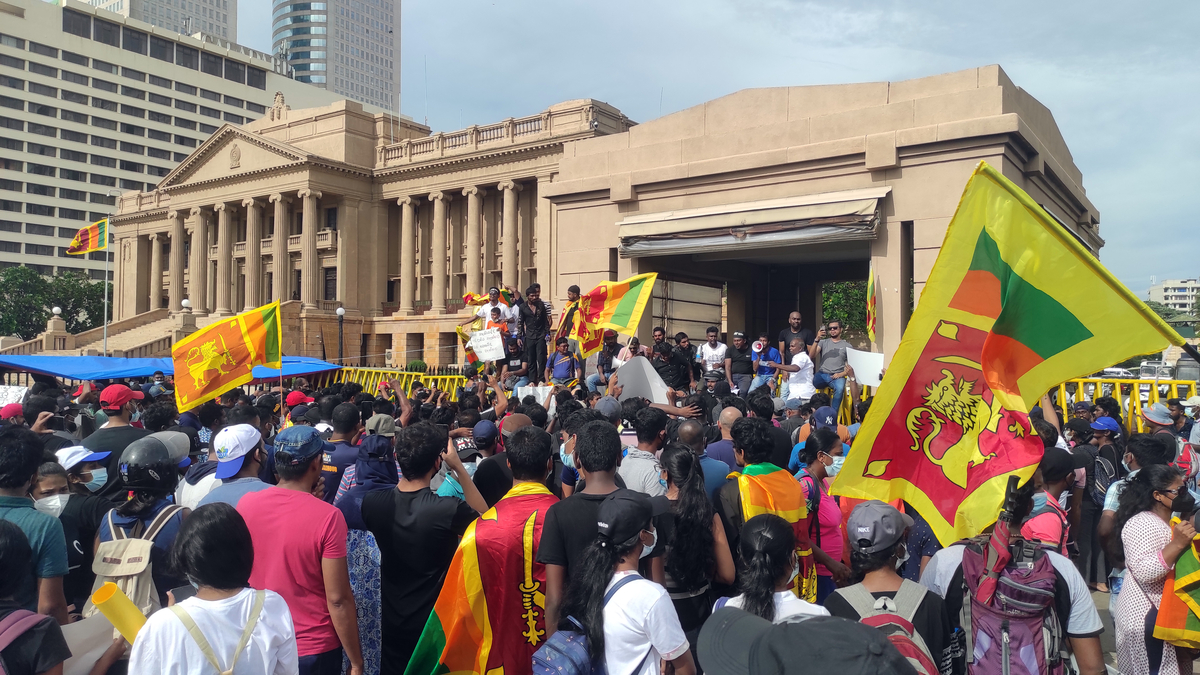
Economic crisis sparks government protests
Sri Lanka

Economic Downturn
Political
5 min read
Updated By: History Editorial Network (HEN)
Published:
Economic mismanagement had been festering in Sri Lanka for years, leading to unprecedented levels of inflation, rampant unemployment, and severe shortages of essential goods. Citizens had borne the brunt of policy breakdowns, currency devaluation, and dwindling foreign reserves. Frustrations reached a boiling point, compelling thousands to take to the streets in protest against the government's handling of the crisis.
Sri Lanka's GDP growth had faltered, marked by lower-than-expected agricultural yields and a significant downturn in tourism—a sector critical to its economy. Compounded by mismanaged debt obligations and insufficient foreign direct investment, fiscal deficits deepened. Basic commodities like rice, sugar, and milk powder became scarce, with prices soaring exponentially. Electricity outages were common, and fuel shortages crippled public and private transportation.
At the height of public discontent, demonstrators gathered in Colombo and other major cities, voicing their grievances through slogans, banners, and mass rallies. The protests were widespread and included diverse sections of society, such as students, professionals, and the working class. The demonstrators demanded accountability and sought comprehensive economic reforms and governmental transparency.
Law enforcement responded with measures aimed at dispersing crowds, which led to confrontations and, in some cases, violent clashes. Tear gas and water cannons were deployed; dozens were arrested, sparking further outrage both domestically and internationally. Human rights organizations raised alarms, urging the government to respect citizens' rights to peaceful assembly and expression.
Media coverage of the uprising spotlighted the severity of the economic plight Sri Lankans faced, amplifying calls for international intervention and support. Economists suggested frameworks for stabilizing the nation’s economy, advocating for IMF assistance and prudent fiscal reforms. The political ramifications were immediate, with some members of parliament resigning and pressure mounting on the executive branch to initiate policy reforms.
This profound public display highlighted the nexus between governance and economic stability, underscoring the importance of accountable leadership.
#EconomicCrisis #SriLankaProtests #PublicDiscontent #FiscalPolicy #MoofLife
Primary Reference
2022 Sri Lankan protests - Wikipedia

Explore the Life Moments of
 AI Twin