Van Allen radiation belt confirmed
Cape Canaveral, Florida, United States
Space Exploration
Astrophysics
Scientific Discoveries
3 min read
Updated By: History Editorial Network (HEN)
Published:
Updated:
On 31/01/1958, the United States successfully launched Explorer 1, its first artificial satellite, aboard a Juno I rocket from Cape Canaveral, Florida. The mission marked the country’s entry into Earth orbit during the early phase of the Space Race. Explorer 1 was developed by the Jet Propulsion Laboratory (JPL) and the U.S. Army Ballistic Missile Agency, with scientific instrumentation designed under the direction of physicist Dr. James Van Allen of the University of Iowa.
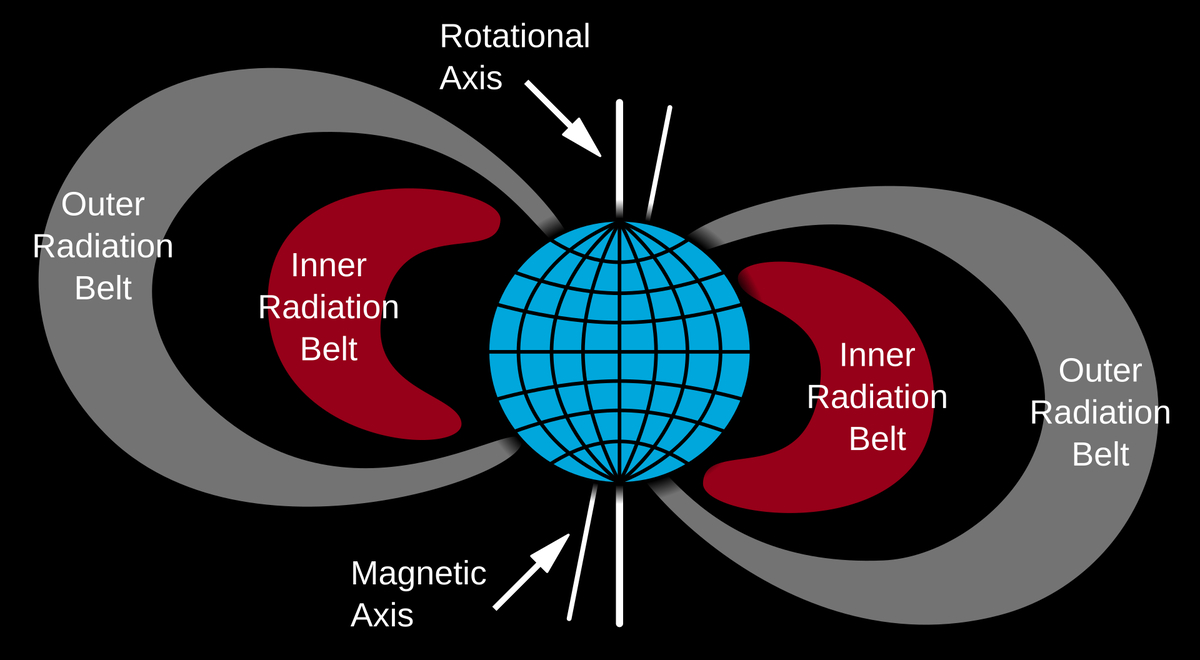
The satellite carried a cosmic ray detector intended to measure high-energy radiation in space. During its mission, the instrument recorded unexpected variations in radiation levels, including periods where readings dropped to near zero. These anomalies were later interpreted as evidence of intense bands of charged particles trapped by Earth’s magnetic field. This led to the identification of what became known as the Van Allen radiation belts, a major scientific discovery about Earth’s space environment.
Explorer 1 remained in orbit for several months, transmitting data until May 1958, and continued circling Earth until it reentered the atmosphere on 31/03/1970. The mission demonstrated the value of scientific instruments aboard satellites and contributed to the establishment of NASA later in 1958.
#mooflife
#MomentOfLife
#VanAllenRadiationBelt
#Explorer1
#SpaceExploration
#Magnetosphere
#CosmicRays
Primary Reference
Van Allen radiation belt

Explore the Life Moments of
 AI Twin