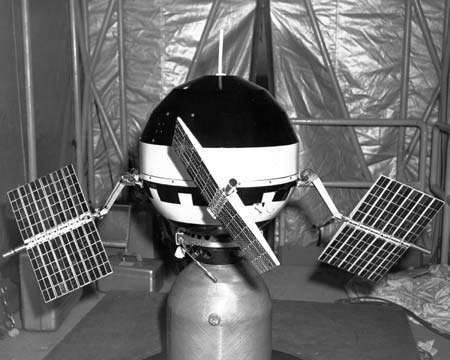
Pioneer 5: First Solar Probe Launch
Cape Canaveral, Florida, United States
Space Exploration
NASA
Pioneer Program
3 min read
Updated By: History Editorial Network (HEN)
Published:
Updated:
On 11/03/1960, NASA successfully launched the Pioneer 5 space probe, marking a key early step in the study of interplanetary space. The spacecraft was launched from Cape Canaveral, Florida, aboard a Thor-Able rocket, with the primary objective of investigating the region between Earth and Venus. Often referred to as one of the first true solar probes, Pioneer 5 was designed to collect data on magnetic fields, cosmic radiation, and solar particles far beyond Earth’s immediate environment.
During its mission, Pioneer 5 transmitted valuable scientific data for several months, operating well beyond the distance of the Moon. One of its most important contributions was providing one of the first detailed measurements of the interplanetary magnetic field, helping scientists better understand how the Sun influences space between planets. The probe also recorded solar wind activity and energetic particles, contributing to early models of space weather. Communication with the spacecraft was maintained until 26/06/1960, when contact was lost at a distance of approximately 36.2 million kilometers from Earth.
Pioneer 5 demonstrated that spacecraft could operate and communicate over vast distances in interplanetary space, validating tracking and telemetry systems that would be essential for future missions. Its findings contributed to the growing scientific understanding of the Sun’s influence across the solar system during the early years of space exploration.
#mooflife
#MomentOfLife
#Pioneer5
#SolarProbe
#Nasa
#SpaceExploration
#SolarResearch
Primary Reference
Pioneer 5

Explore the Life Moments of
 AI Twin