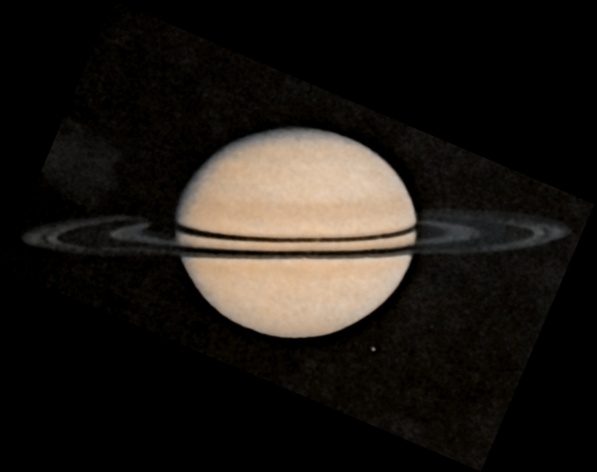
Pioneer 11's Historic Flyby of Saturn
Saturn flyby, outer Solar System
Space Exploration
NASA
Pioneer 11
4 min read
Updated By: History Editorial Network (HEN)
Published:
Updated:
On 01/09/1979, NASA’s Pioneer 11 spacecraft became the first human-made object to encounter Saturn, passing within approximately 21,000 kilometers of the planet’s cloud tops. Launched on 06/04/1973, Pioneer 11 spent more than six years traveling through the Solar System before reaching Saturn, paving the way for future missions to the outer planets.
During its flyby, Pioneer 11 provided the first direct measurements and close-up data of Saturn and its environment. The spacecraft identified previously unknown features within Saturn’s ring system, including the narrow F ring and the G ring, and detected a gap later known as the Pioneer Division between the A and F rings. These observations revealed that Saturn’s rings were more complex than previously understood from Earth-based observations.
The mission also contributed to the discovery of small moons orbiting Saturn and recorded a near encounter with one of them, likely Epimetheus or Janus, passing at a distance of about 2,500 miles. Pioneer 11 collected data on Saturn’s atmosphere, confirming that the planet is composed primarily of hydrogen and measuring temperatures around −180°C. It also observed Saturn’s largest moon, Titan, determining a surface temperature of approximately −193°C, which indicated extremely cold conditions.
In addition to its scientific findings, Pioneer 11’s trajectory through Saturn’s ring plane provided critical data about potential hazards, helping to assess risks for later missions such as Voyager 1 and Voyager 2. The successful flyby demonstrated that spacecraft could safely navigate the outer Solar System and conduct detailed studies of distant gas giants.
#mooflife
#MomentOfLife
#Pioneer11
#SaturnFlyby
#Nasa
#Titan
#SpaceExploration
Primary Reference
Pioneer 11

Explore the Life Moments of
 AI Twin