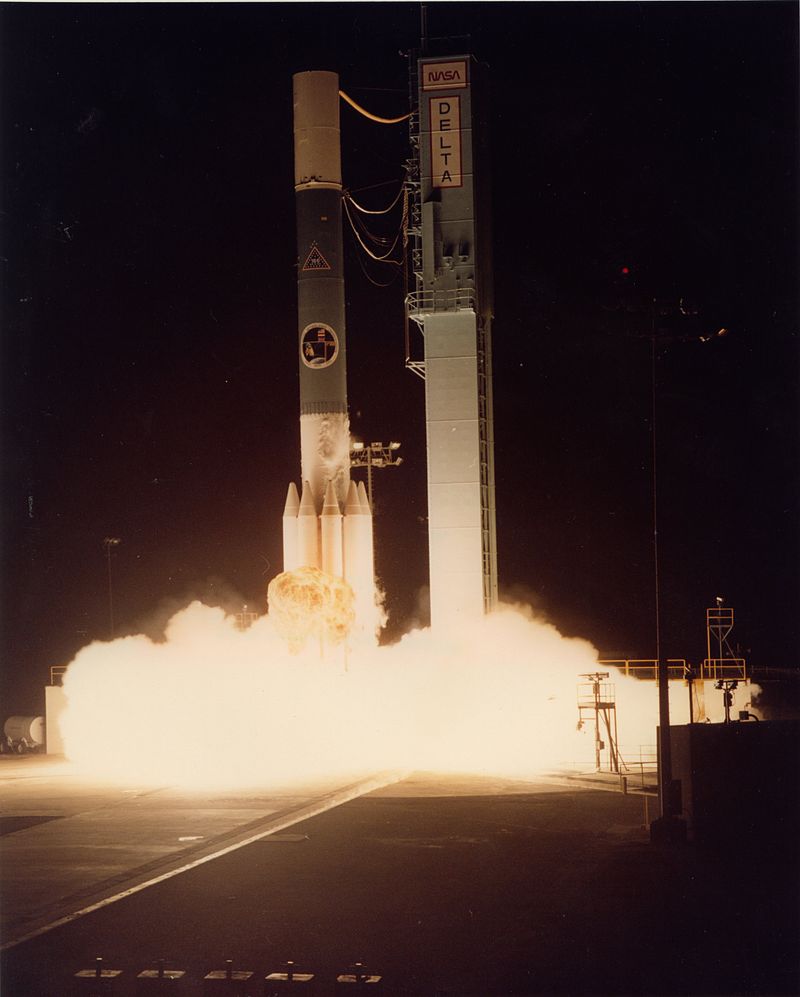
Launch of First Infrared Orbital Observatory
United States of America
Space
Astronomy
Technology
4 min read
Updated By: History Editorial Network (HEN)
Published:
Updated:
The launch of the first infrared orbital observatory marked a pivotal advancement in astronomical research. The Infrared Astronomical Satellite (IRAS) was a collaborative mission involving NASA, the UK Science and Engineering Research Council (SERC), and the Netherlands Institute for Space Research (NIVR). This mission was designed to survey the sky in infrared wavelengths, which are crucial for observing celestial objects that are often obscured by dust and gas in the universe. The IRAS satellite was equipped with a 60 cm telescope and three scientific instruments that allowed it to detect and analyze infrared radiation from various astronomical sources, including stars, galaxies, and comets. The data collected by IRAS provided insights into the formation of stars and the structure of our galaxy, significantly enhancing our understanding of the universe's evolution.
The impact of the IRAS mission was profound, as it was the first of its kind to conduct a comprehensive survey of the sky in infrared light. Over its operational period, IRAS cataloged more than 350,000 celestial objects, including previously unknown stars and galaxies. The mission's findings contributed to the discovery of numerous astronomical phenomena, such as the identification of new types of stars and the mapping of the Milky Way's dust clouds. The data from IRAS also laid the groundwork for future infrared missions, influencing the design and objectives of subsequent observatories. The success of IRAS demonstrated the importance of infrared astronomy and opened new avenues for research, leading to advancements in our understanding of the cosmos.
#mooflife
#MomentOfLife
#InfraredAstronomy
#Iras
#Nasa
#SpaceExploration
#AstronomicalResearch
Primary Reference
IRAS

Explore the Life Moments of
 AI Twin