First Venus Soil Samples and Sound Recording
Venus surface, east of Phoebe Regio
Space Exploration
Venus
Science
4 min read
Updated By: History Editorial Network (HEN)
Published:
Updated:
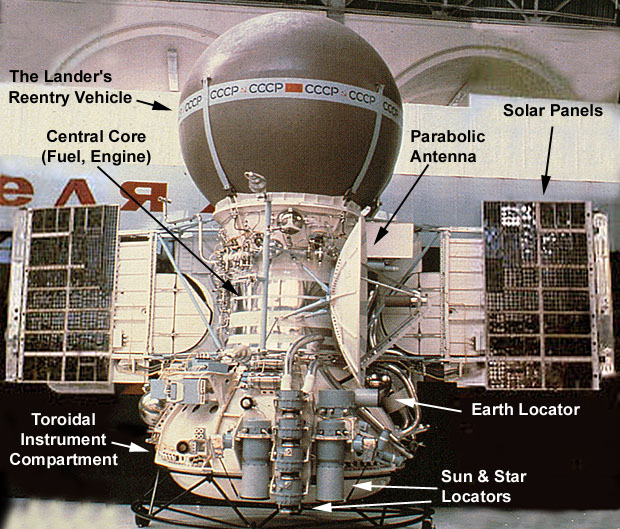
On 01/03/1982, the Soviet Union’s Venera 13 spacecraft successfully landed on Venus and became the first probe to transmit color photographs and sound recordings from the planet’s surface. The mission was part of the Venera program, which focused on exploring Venus’s extreme environment through a series of robotic landers.
Venera 13 touched down at approximately 7.5° south latitude and 303° east longitude, in a region east of Phoebe Regio. After landing, the spacecraft deployed its instruments and began transmitting data back to Earth. It captured the first color panoramic images of the Venusian surface, revealing a rocky terrain scattered with flat slabs and fragmented stones under a dense, yellowish atmosphere. The probe also recorded sound, marking the first acoustic data ever obtained from the surface of another planet.
The lander operated under extreme environmental conditions, with surface temperatures around 457°C and atmospheric pressure about 89 times that of Earth. Despite being designed to function for roughly 32 minutes, Venera 13 continued transmitting data for 127 minutes before ceasing operations. During this time, it conducted soil analysis using onboard instruments, identifying elements such as potassium, uranium, and thorium in the Venusian regolith.
The success of Venera 13 provided detailed insights into Venus’s surface composition and environmental conditions. Its data contributed to a clearer understanding of the planet’s geology and atmosphere, and it remains one of the most successful Venus surface missions ever conducted.
#mooflife
#MomentOfLife
#Venera13
#VenusExploration
#PlanetaryScience
#SpaceMissions
#ExtraterrestrialSounds
Primary Reference
Venera 13

Explore the Life Moments of
 AI Twin