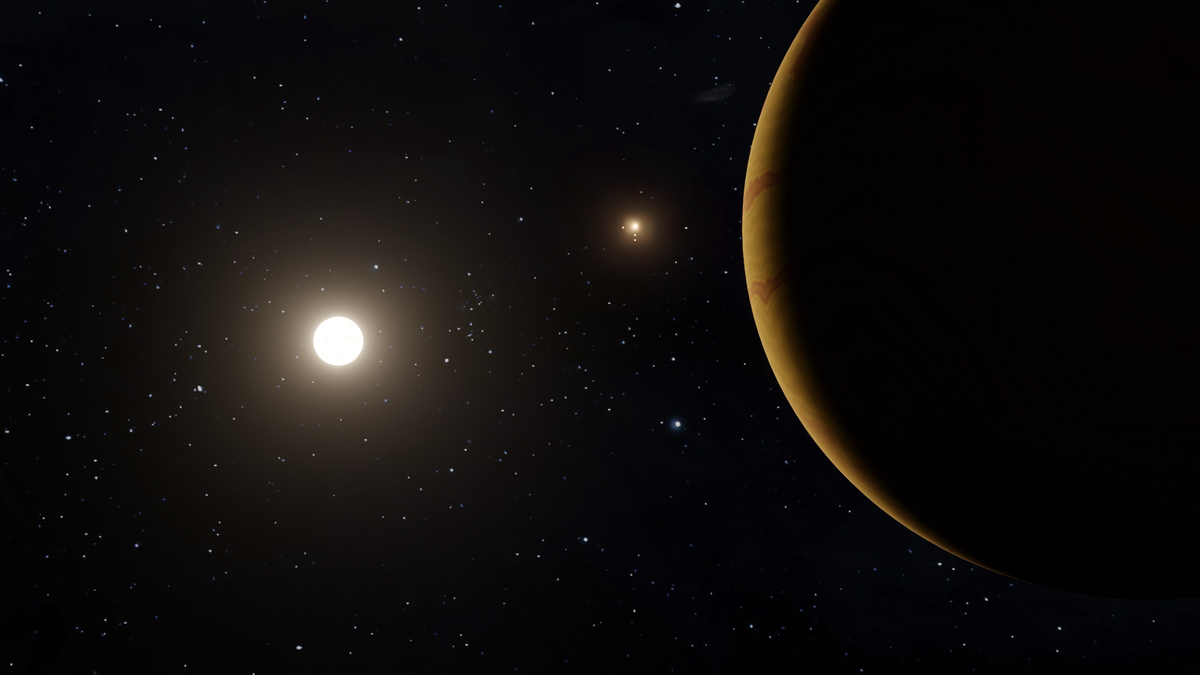
First Suspected Detection of an Exoplanet
United States of America
Astronomy
Exoplanets
Canadian Research
4 min read
Updated By: History Editorial Network (HEN)
Published:
Updated:
The first suspected detection of an exoplanet occurred when Canadian astronomers Bruce Campbell, Gordon Walker, and Stephenson Yang identified a potential exoplanet orbiting the star Gamma Cephei. This discovery marked a pivotal moment in the field of astronomy, as it opened the door to the exploration of planets outside our solar system. Prior to this detection, the existence of exoplanets was largely theoretical, with astronomers relying on indirect evidence and models to speculate about their presence. The identification of Gamma Cephei Ab provided the first concrete indication that planets could exist around stars other than the Sun, fundamentally altering our understanding of the universe and our place within it.
The impact of this detection has been profound, leading to a surge in interest and research in the field of exoplanet studies. Following this initial finding, advancements in technology and observational techniques have allowed astronomers to discover thousands of exoplanets, many of which are located in the habitable zones of their respective stars. This has significant implications for the search for extraterrestrial life and the study of planetary systems. The methods developed during the search for Gamma Cephei Ab have since been refined and adapted, contributing to the success of missions such as the Kepler Space Telescope and the Transiting Exoplanet Survey Satellite (TESS). The ongoing exploration of exoplanets continues to enhance our understanding of planetary formation and the potential for life beyond Earth.
#mooflife
#MomentOfLife
#ExoplanetDetection
#GammaCepheiAb
#Astronomy
#SpaceExploration
#ExtraterrestrialLife
Primary Reference
https://en.wikipedia.org/wiki/Gamma_Cephei_Ab

Explore the Life Moments of
 AI Twin