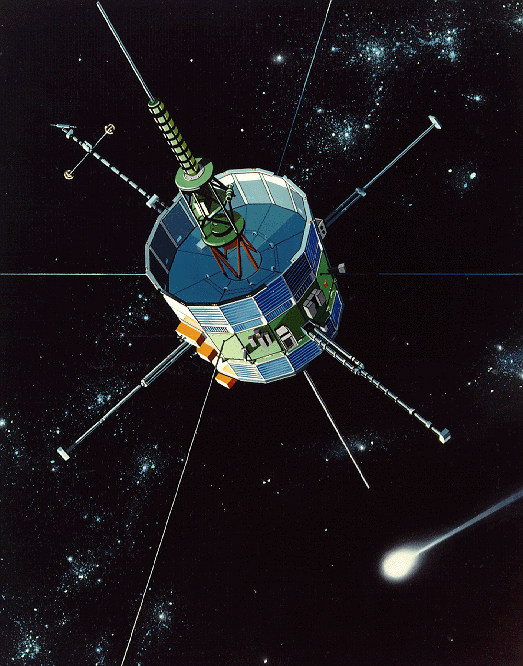
First Spacecraft to Flyby a Comet
United States of America
Space Exploration
Cometary Science
NASA Missions
4 min read
Updated By: History Editorial Network (HEN)
Published:
Updated:
NASA's ISEE-3/ICE spacecraft marked a pivotal achievement in space exploration by conducting the first flyby of a comet, specifically 21P/Giacobini-Zinner. This mission provided scientists with unprecedented data about the composition and behavior of comets, which are considered remnants from the early solar system. The ISEE-3/ICE spacecraft was originally launched for a mission to study solar wind and cosmic rays, but its trajectory was adjusted to allow for the comet flyby. This maneuver demonstrated the versatility of space missions and the ability to adapt existing technology for new scientific objectives. The flyby occurred at a distance of approximately 800 kilometers from the comet's nucleus, allowing for detailed observations and measurements of the comet's structure and activity. The data collected during this mission contributed significantly to the understanding of cometary phenomena and the role of comets in the solar system's evolution.
The impact of this mission extended beyond the immediate scientific findings. It paved the way for future comet exploration missions, including the more famous Rosetta mission, which later orbited and landed on a comet. The success of the ISEE-3/ICE flyby also highlighted the importance of international collaboration in space science, as it involved contributions from various scientific communities. The insights gained from the flyby have influenced theories regarding the origins of water on Earth and the potential for life elsewhere in the universe. Overall, the ISEE-3/ICE mission not only marked a milestone in comet exploration but also enhanced the understanding of the solar system's history and the processes that govern celestial bodies.
#mooflife
#MomentOfLife
#CometExploration
#NasaIsee-3
#SpacecraftFlyby
#21p/giacobini-zinner
#SpaceScience
Primary Reference
International Cometary Explorer

Explore the Life Moments of
 AI Twin