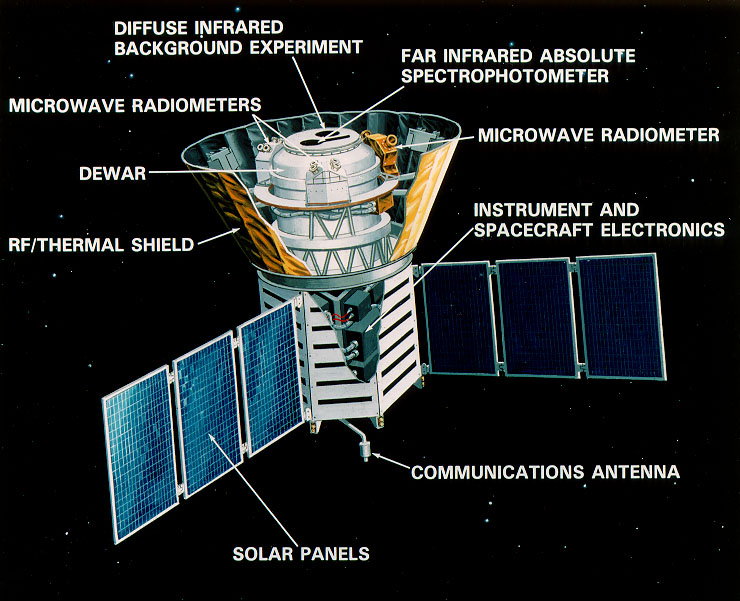
First Orbital Cosmic Microwave Observatory
Neptune flyby, outer Solar System
Space Exploration
Astrophysics
Satellite Missions
4 min read
Updated By: History Editorial Network (HEN)
Published:
Updated:
On 25/08/1989, NASA’s Voyager 2 spacecraft carried out the first and only close flyby of Neptune, marking the defining space exploration event of that date. While 1989 also saw the launch of the Cosmic Background Explorer (COBE) later in the year on 18/11/1989, it was Voyager 2’s encounter with Neptune in August that drew global scientific attention and concluded a sequence of planetary flybys spanning over a decade.
Voyager 2 approached Neptune after a journey that began with its launch on 20/08/1977. During its closest approach, the spacecraft passed approximately 4,951 kilometers above Neptune’s north pole. It returned detailed images and measurements that significantly expanded scientific knowledge of the distant ice giant. Among its observations was the Great Dark Spot, a large storm system in Neptune’s atmosphere, along with wind speeds reaching up to 2,100 kilometers per hour. These findings provided evidence of intense atmospheric activity despite Neptune’s distance from the Sun.
The flyby also led to the discovery of six new moons, including Proteus and Larissa, and confirmed the presence of a faint ring system composed of four rings. Voyager 2’s observations of Triton, Neptune’s largest moon, revealed a geologically active surface with nitrogen geysers and extremely low temperatures around −235°C. These findings made Triton one of the most unusual moons observed in the Solar System.
Although COBE would later become the first satellite dedicated to studying the cosmic microwave background after its launch in November 1989, its milestone belongs to a different date. In contrast, 25 August 1989 is firmly associated with Voyager 2’s Neptune encounter, which remains the only direct exploration of the planet to date.
#mooflife
#MomentOfLife
#Cobe
#CosmicMicrowaveBackground
#Nasa
#Cosmology
#SpaceExploration
Primary Reference
Cosmic Background Explorer

Explore the Life Moments of
 AI Twin