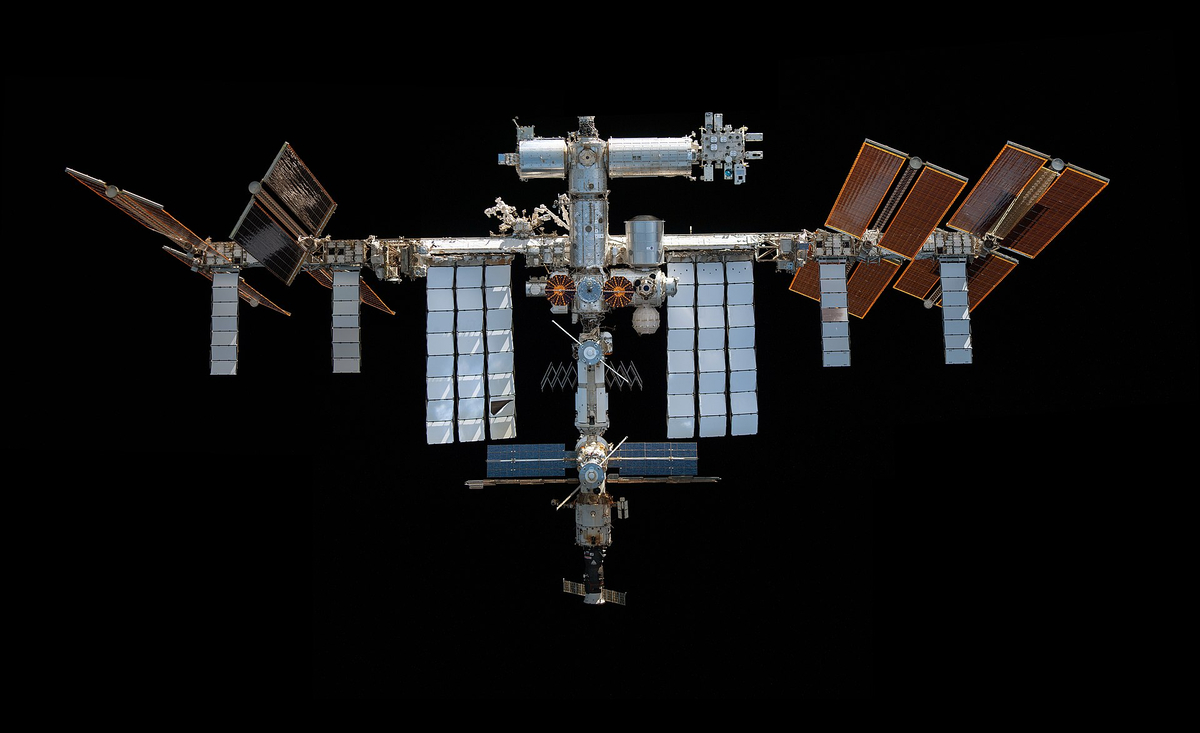
First Multinational Space Station Launched
Baikonur Cosmodrome, Kazakhsta
Space
Science
Technology
3 min read
Updated By: History Editorial Network (HEN)
Published:
Updated:
On 20/11/1998, the first module of the International Space Station, Zarya, was launched into orbit, marking the start of ISS assembly. The module lifted off aboard a Proton K rocket from the Baikonur Cosmodrome in Kazakhstan. Zarya, also known as the Functional Cargo Block, was built by Russia and funded by NASA. It provided initial propulsion, guidance, electrical power, and communications for the early station configuration. The launch initiated construction of what would become the first permanently inhabited multinational space station.
Zarya operated autonomously in orbit for about two weeks before the arrival of the second major component. On 04/12/1998, Space Shuttle Endeavour delivered the Unity module during the STS 88 mission. Astronauts used the shuttle’s robotic arm to capture Zarya and connect it to Unity, forming the initial core of the station. This connection established the basic structure for future modules and enabled the gradual expansion of the ISS.
The International Space Station was developed through cooperation among NASA, Roscosmos, ESA, JAXA, and the Canadian Space Agency. The launch of Zarya on 20/11/1998 marked the beginning of long term assembly in low Earth orbit. Additional modules, trusses, solar arrays, and laboratories were added over subsequent years, leading to continuous human presence beginning in November 2000.
#mooflife
#MomentOfLife
#InternationalSpaceStation
#MultinationalCollaboration
#SpaceExploration
#Nasa
#ScientificResearch
Primary Reference
International Space Station

Explore the Life Moments of
 AI Twin