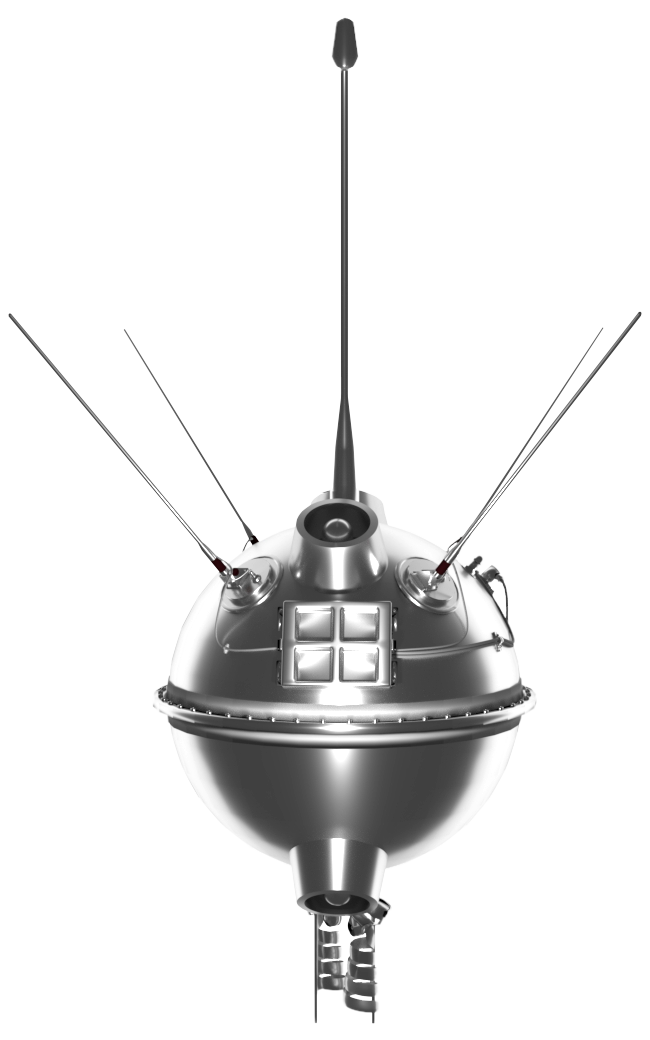
First impact on another celestial body
Baikonur Cosmodrome, Kazakhstan (launch); Mare Imbrium region, Moon
Space Exploration
History of Spacecraft
Lunar Missions
3 min read
Updated By: History Editorial Network (HEN)
Published:
Updated:
On 13/09/1959, the Soviet Union’s Luna 2 spacecraft became the first human-made object to reach the surface of another celestial body, marking a breakthrough in early space exploration. Launched on 12/09/1959 from the Baikonur Cosmodrome, Luna 2 was part of the Soviet Luna program and was designed to impact the Moon rather than land softly. The mission followed the earlier Luna 1, which had missed the Moon earlier that year.
Luna 2 successfully impacted the Moon near the Mare Imbrium region at approximately 21:02 UTC on 13/09/1959. The spacecraft carried scientific instruments including Geiger counters, scintillation counters, and magnetometers, which transmitted data during its journey. These measurements confirmed the absence of a significant lunar magnetic field and detected solar wind particles, contributing to early understanding of space environment conditions.
The spacecraft also carried metal spheres engraved with the Soviet emblem, which were intended to scatter upon impact as a symbolic marker of the mission. Signals from Luna 2 ceased upon collision, confirming that it had reached the lunar surface. The achievement demonstrated that it was possible to navigate a spacecraft from Earth to another celestial body, an important step in the development of later lunar missions.
#mooflife
#MomentOfLife
#Luna2
#SpaceExploration
#MoonImpact
#Ussr
#SpaceRace
Primary Reference
Luna 2

Explore the Life Moments of
 AI Twin