First human flight to another celestial body
Kennedy Space Center, Florida, USA; Lunar orbit; Pacific Ocean
Space Exploration
Aerospace Engineering
Human Spaceflight
4 min read
Updated By: History Editorial Network (HEN)
Published:
Updated:
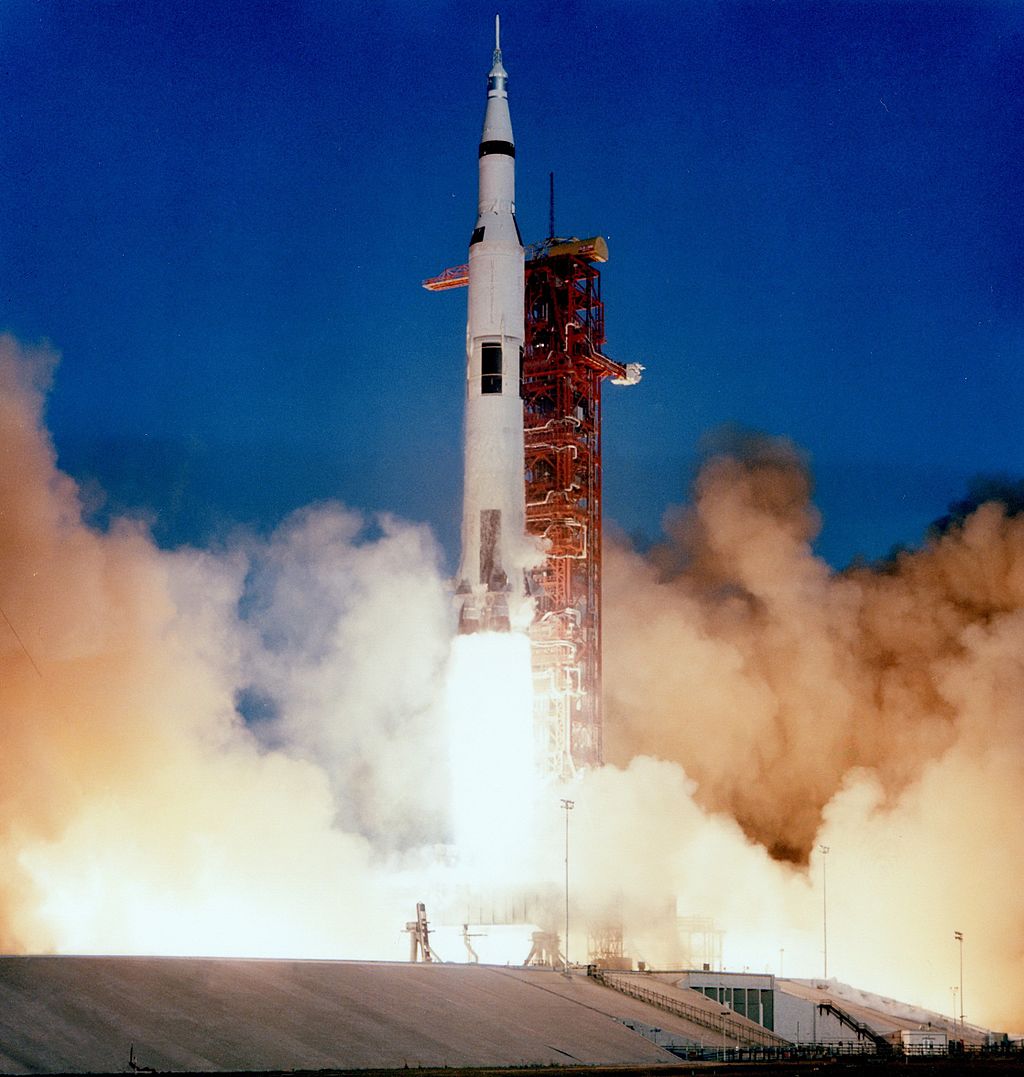
On 24/12/1968, NASA’s Apollo 8 mission became the first crewed spacecraft to reach and orbit the Moon, carrying astronauts Frank Borman, James Lovell, and William Anders. Launched on 21/12/1968 from Kennedy Space Center in Florida atop a Saturn V rocket, the mission was originally planned as a test of the lunar module in Earth orbit but was reassigned to a lunar orbit mission due to delays in the module’s development. The decision marked a significant step in the United States’ efforts during the space race.
Apollo 8 entered lunar orbit on 24/12/1968 after a successful translunar injection and a three-day journey covering approximately 384,000 kilometers. The spacecraft completed 10 orbits around the Moon over about 20 hours, allowing the crew to observe and photograph the lunar surface. During the mission, astronaut William Anders captured the famous “Earthrise” photograph, showing Earth rising above the Moon’s horizon, which later became one of the most widely recognized images from space.
On the same day, the crew conducted a live television broadcast from lunar orbit, reading passages from the Book of Genesis to a global audience. The broadcast was watched by millions of people worldwide and became one of the most viewed television events at the time. Apollo 8 departed lunar orbit on 25/12/1968 and safely returned to Earth, splashing down in the Pacific Ocean on 27/12/1968.
The mission demonstrated the capability of human spaceflight beyond Earth orbit and validated navigation, communication, and life-support systems required for future lunar landings, directly contributing to the success of Apollo 11 in July 1969.
#mooflife
#MomentOfLife
#Apollo8
#MoonMission
#Nasa
#SpaceExploration
#HumanSpaceflight
Primary Reference
https://en.wikipedia.org/wiki/Apollo_8

Explore the Life Moments of
 AI Twin