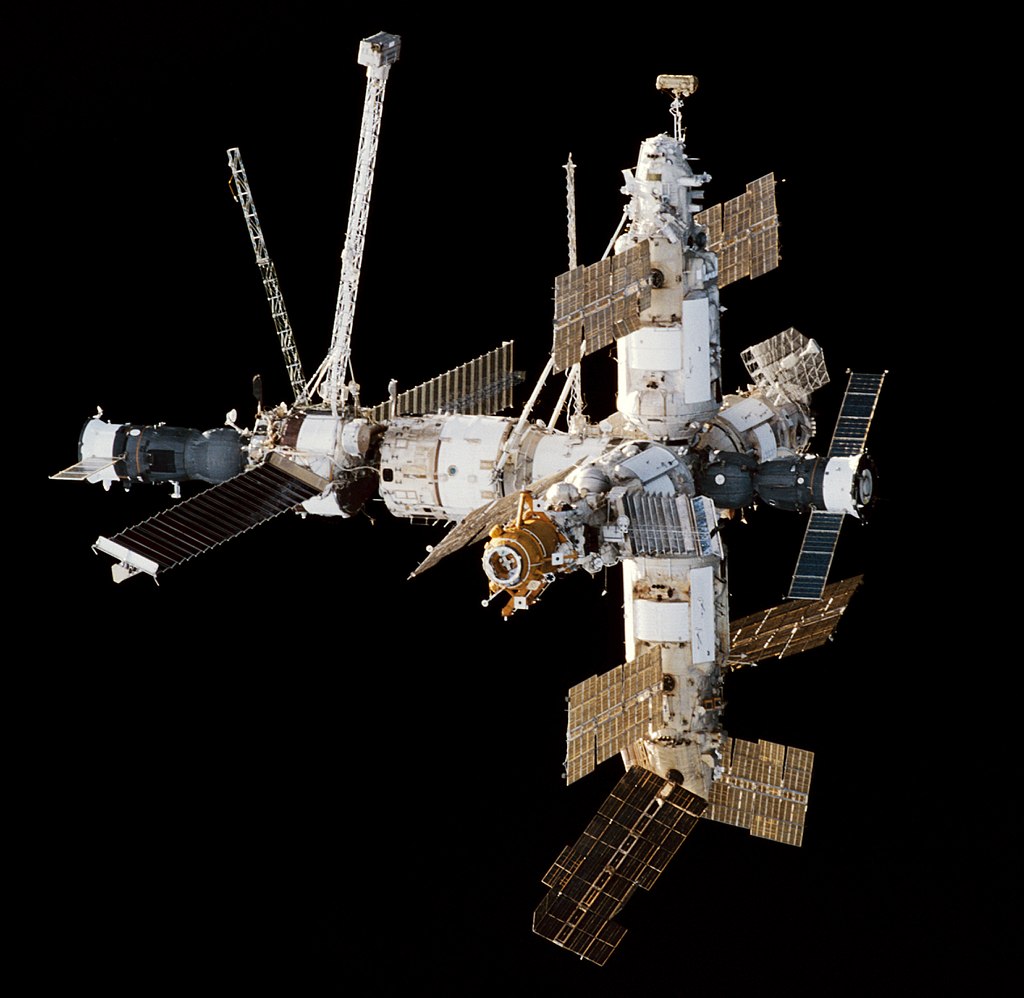
First Consistently Inhabited Long-Term Research Space Station
United States of America
Space Exploration
Research Stations
History of the USSR
4 min read
Updated By: History Editorial Network (HEN)
Published:
Updated:
The launch of Mir marked a pivotal advancement in space exploration as it became the first consistently inhabited long-term research space station. Developed by the USSR, Mir was designed to facilitate a range of scientific experiments and foster international cooperation in space research. The station was equipped with multiple modules that allowed for the accommodation of astronauts and cosmonauts for extended periods, significantly enhancing the capabilities for long-term human presence in space. Over its operational lifespan, Mir hosted numerous missions, contributing to our understanding of life in microgravity and the effects of prolonged space travel on the human body. The station served as a platform for various scientific disciplines, including biology, physics, and materials science, and it played a crucial role in the development of technologies necessary for future space missions, including those to the International Space Station (ISS).
Mir's impact extended beyond scientific research; it also represented a significant step in international collaboration in space. The station hosted astronauts from different countries, fostering a spirit of cooperation that would later be essential for the ISS. The data collected from experiments conducted aboard Mir has been invaluable in shaping our current understanding of space habitation and has informed the design and operation of subsequent space stations. The legacy of Mir continues to influence space exploration strategies and policies, highlighting the importance of sustained human presence in space for advancing scientific knowledge and international partnerships.
#mooflife
#MomentOfLife
#Mir
#SpaceStation
#Long-termResearch
#SpaceExploration
#InternationalCooperation
Primary Reference
Mir

Explore the Life Moments of
 AI Twin