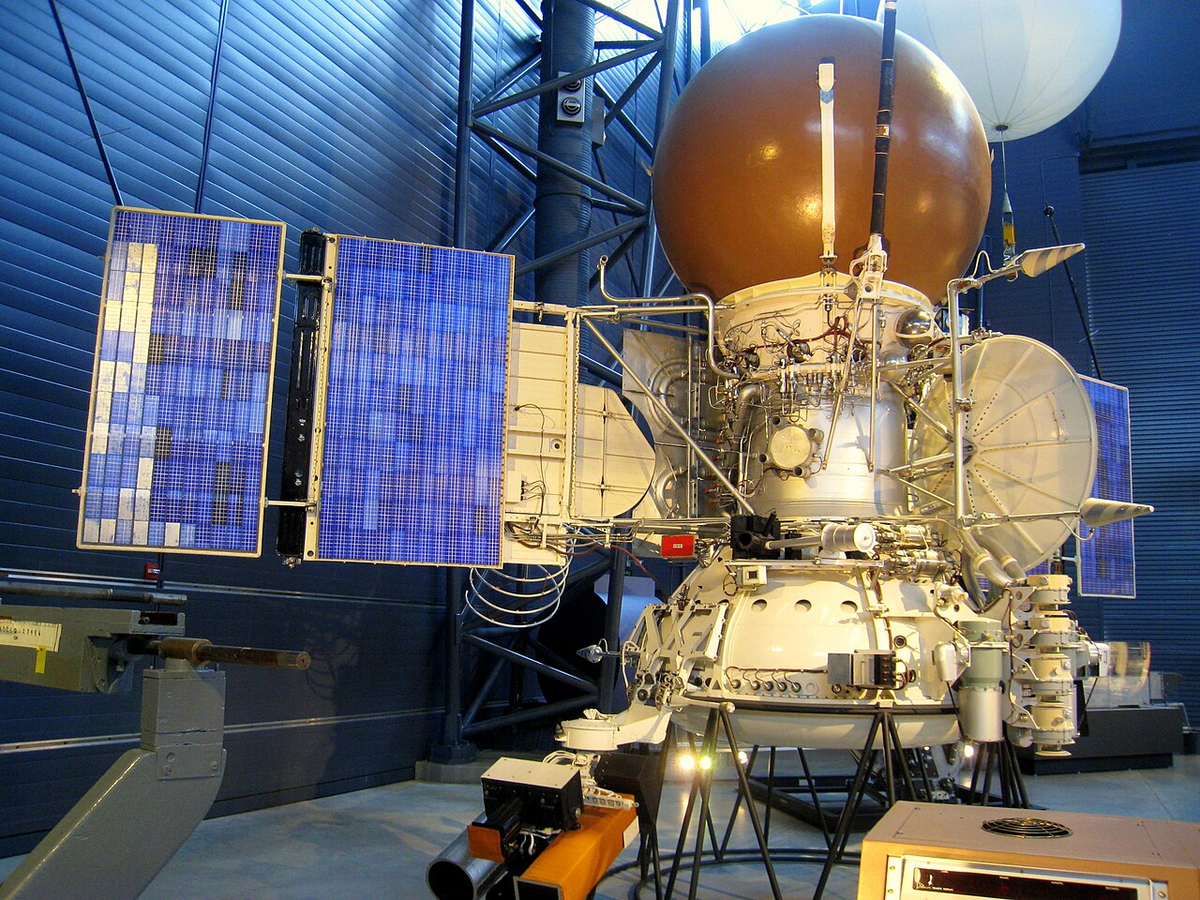
First Balloon Deployed on Another Planet
United States of America
Space Exploration
Planetary Science
Aerospace Technology
4 min read
Updated By: History Editorial Network (HEN)
Published:
Updated:
The Vega 1 mission, launched by the USSR, marked a pivotal advancement in planetary exploration with the deployment of the first balloon on another planet, specifically Venus. This mission was part of a broader program aimed at studying the atmosphere and surface conditions of Venus, which is known for its extreme temperatures and dense atmosphere. The balloon was designed to float in the upper atmosphere of Venus, where it could gather data on atmospheric composition, pressure, and temperature. This innovative approach allowed scientists to collect information from a region that was otherwise difficult to study due to the planet's harsh conditions. The successful deployment of the balloon represented a significant technological achievement, showcasing the capabilities of remote sensing and atmospheric research in extraterrestrial environments.
The impact of the Vega 1 mission extended beyond the immediate scientific data collected. It provided valuable insights into the atmospheric dynamics of Venus, contributing to a better understanding of planetary atmospheres in general. The mission also laid the groundwork for future explorations of Venus and other celestial bodies, influencing subsequent missions that aimed to study planetary atmospheres and surface conditions. The data obtained from the balloon helped refine models of Venus's climate and contributed to the broader field of comparative planetology. Overall, the deployment of the first balloon on another planet was a landmark event in space exploration, demonstrating the potential for innovative technologies to enhance our understanding of the solar system.
#mooflife
#MomentOfLife
#Vega1
#VenusExploration
#PlanetaryScience
#AtmosphericResearch
#SpaceMissions
Primary Reference
Vega 1

Explore the Life Moments of
 AI Twin