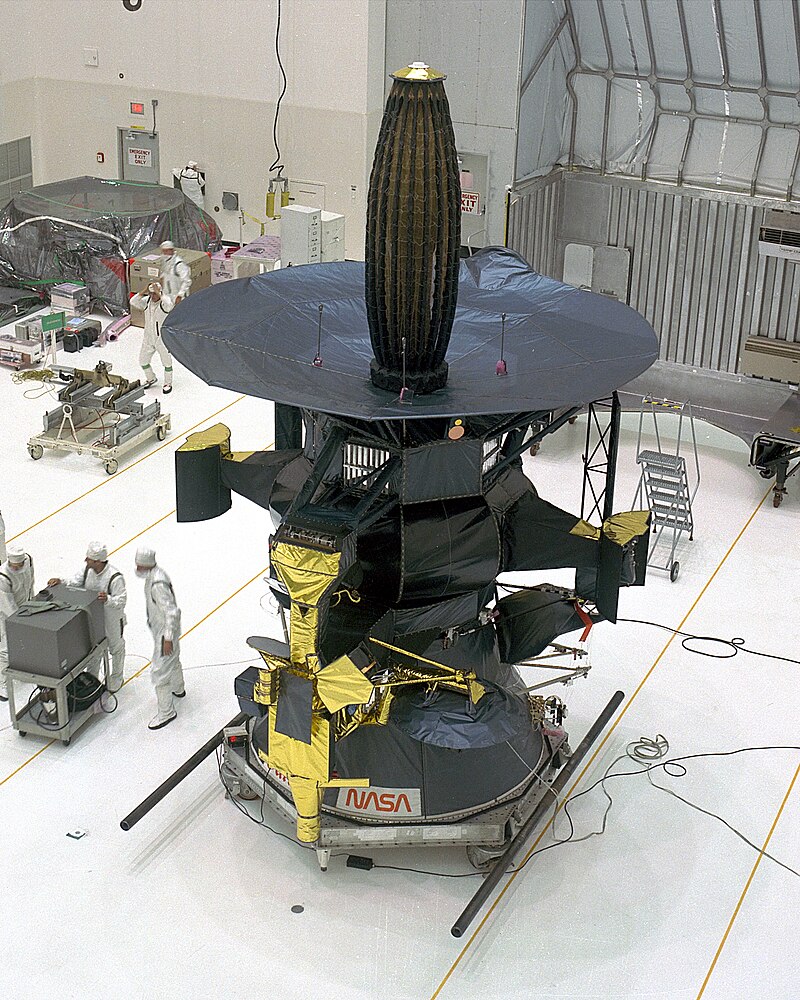
First Asteroid Flyby by NASA's Galileo
Near asteroid 951 Gaspra, Main Asteroid Belt
Space
NASA
Asteroids
4 min read
Updated By: History Editorial Network (HEN)
Published:
Updated:
On 29/10/1991, NASA’s Galileo spacecraft completed the first-ever close flyby of an asteroid, capturing detailed images and data from 951 Gaspra during its journey to Jupiter. This encounter marked the first time a human-made spacecraft approached and studied an asteroid at close range, providing direct observational data of such a celestial body.
Galileo, launched on 18/10/1989 from the Space Shuttle Atlantis, was primarily designed to study Jupiter and its moons. However, its trajectory included opportunities to observe other objects along the way. During its flyby of Gaspra, the spacecraft passed at a distance of approximately 1,600 kilometers. It transmitted 57 images back to Earth, revealing Gaspra’s irregular, potato-like shape and a surface marked by numerous craters and ridges. The asteroid measures about 19 kilometers in length and is part of the main asteroid belt between Mars and Jupiter.
The images and data collected during the flyby provided new insights into asteroid composition and surface features. Scientists identified variations in surface reflectivity and geological structures, helping refine theories about asteroid formation and collisional history. The success of this flyby demonstrated the feasibility of close asteroid encounters, influencing the planning of future missions targeting small bodies in the Solar System.
Galileo later performed another asteroid flyby of 243 Ida on 28/08/1993, during which it discovered Dactyl, the first confirmed moon of an asteroid. These early encounters contributed to the development of subsequent missions such as NEAR Shoemaker, Hayabusa, and OSIRIS-REx, which conducted more advanced studies and sample-return missions.
#mooflife
#MomentOfLife
#Nasa
#Galileo
#AsteroidFlyby
#951Gaspra
#SpaceExploration
Primary Reference
Galileo

Explore the Life Moments of
 AI Twin