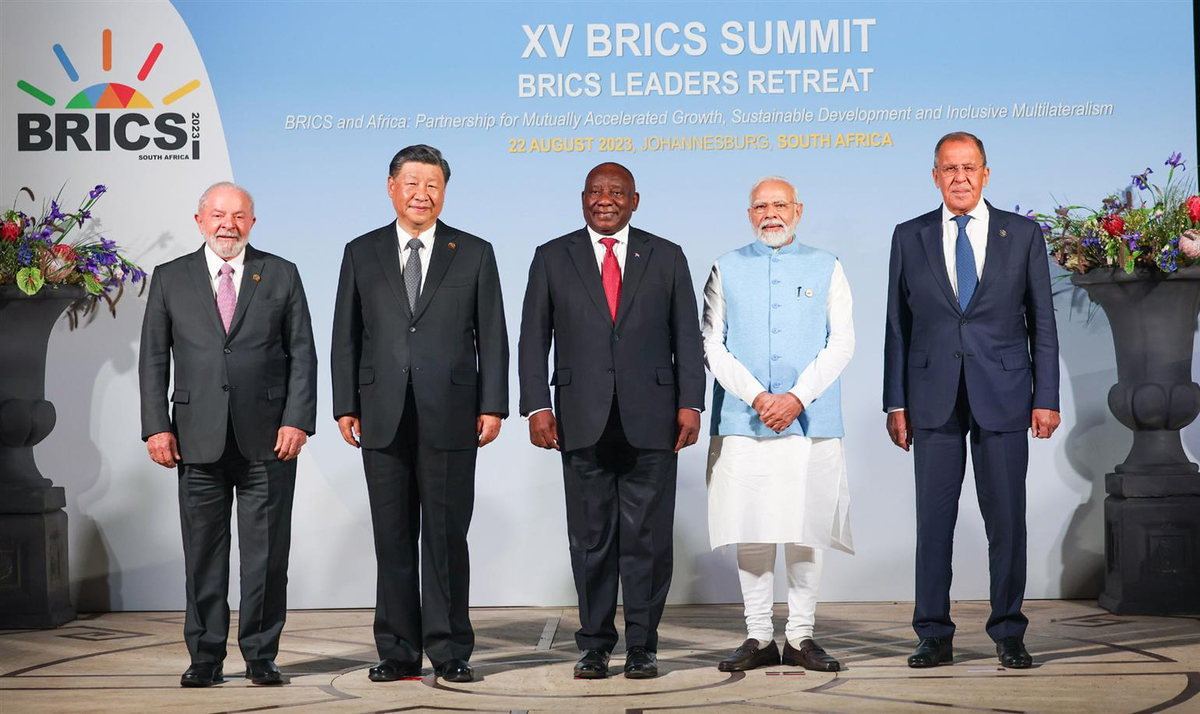
BRICS Meeting Expands Membership to New Nations for Global Power Balance
Global Trade
Political
4 min read
Updated By: History Editorial Network (HEN)
Published:
Leaders from BRICS nations, Brazil, Russia, India, China, and South Africa, gathered in South Africa. The main agenda was to discuss inviting six new countries to join their alliance. The decision aimed to create a more balanced global power structure, countering the influence of the US and Europe.
The meeting was crucial as the BRICS nations sought to strengthen their collective voice in international affairs. The addition of six new countries would expand the group's reach and impact on the global stage. This move was seen as a strategic maneuver to challenge the dominance of Western powers and promote a more multipolar world order.
The invited countries, Indonesia, Mexico, Nigeria, Turkey, Egypt, and Saudi Arabia, were chosen based on their economic potential, geopolitical importance, and regional influence. Their inclusion would further diversify the BRICS alliance and enhance its standing as a formidable bloc in international relations.
The decision received mixed reactions from the global community. Some hailed it as a progressive step towards a more inclusive global governance system, while others raised concerns about the potential challenges of integrating new members with diverse interests and priorities.
Overall, the BRICS meeting in South Africa marked a significant development in reshaping the geopolitical landscape. The decision to invite six new nations reflected a concerted effort to rebalance global power dynamics and foster greater cooperation among emerging economies. The outcome of this gathering was expected to have far-reaching implications for the future of international relations and global governance.
#BRICS #GlobalPowerShift #EmergingEconomies #SouthAfrica #Geopolitics

Explore the Life Moments of
 AI Twin