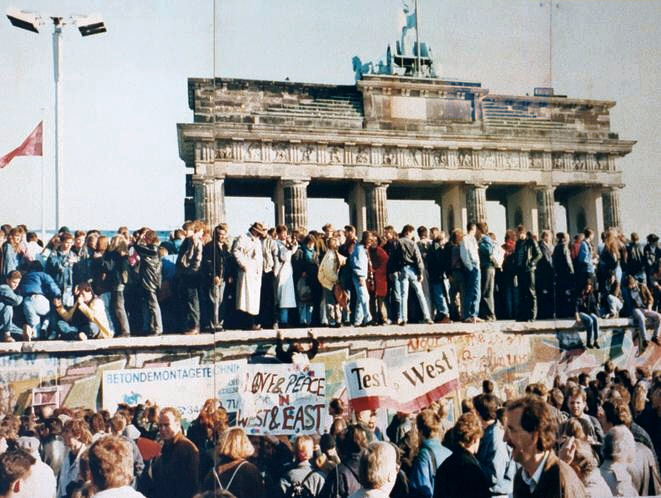
Socialist impact on Fall of Berlin Wall
Russia
4 min read
Updated By: History Editorial Network (HEN)
Published:
The fall of the Berlin Wall in 1989 was one of the most symbolic moments in modern history, marking not only the physical collapse of a barrier but also the ideological unraveling of socialist regimes in Eastern Europe. The Wall, constructed in 1961 by the German Democratic Republic (East Germany), was a stark representation of the divide between socialist East and capitalist West during the Cold War. Its fall was the result of decades of political repression, economic stagnation, and growing public dissatisfaction under socialist rule in East Germany and other Soviet-aligned states. As citizens demanded more freedom, transparency, and reform, socialist governments struggled to maintain control.
The socialist ideology that once promised equality and prosperity had, in many Eastern Bloc nations, resulted in limited civil liberties, inefficient economies, and widespread disillusionment. By the late 1980s, reformist movements across the region, influenced by policies like Mikhail Gorbachev’s *glasnost* (openness) and *perestroika* (restructuring) in the Soviet Union, were gaining momentum. Peaceful protests and civic pressure in East Germany, along with international support and weakening Soviet influence, led to the Wall’s opening on November 9, 1989. While it marked the end of an era for socialist governance in East Germany, it also sparked a wave of democratic transitions across Eastern Europe, reshaping the geopolitical landscape of the post-Cold War world.
\#MomentsOfLife #MoofLife\_Moment #MoofLife #BerlinWall #Socialism #ColdWarEnd #EasternEurope #DemocraticRevolutions #GlobalHistory #FallOfCommunism #HistoricMoments

Explore the Life Moments of
 AI Twin