Dropping of the Anti-Socialist Laws
Russia
Political History
Social Movements
Legislation and Law
4 min read
Updated By: History Editorial Network (HEN)
Published:
Updated:
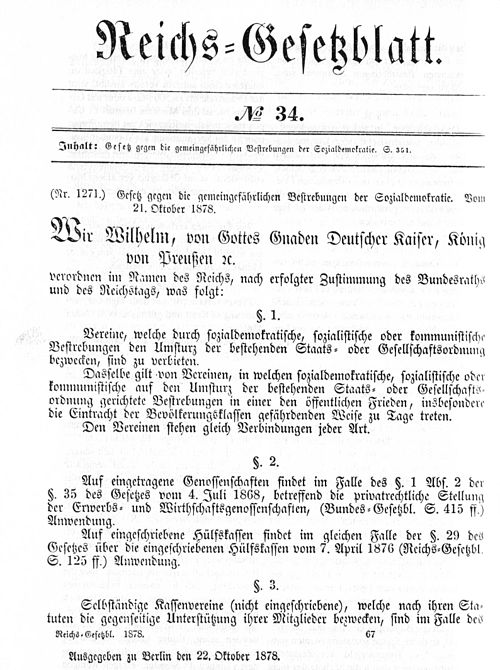
The Anti-Socialist Laws, enacted in 1878 in Germany, were a series of legislative measures aimed at suppressing the growing influence of socialist movements, particularly the Social Democratic Party (SPD). These laws prohibited socialist organizations, publications, and meetings, effectively criminalizing socialist activities. Despite these restrictions, the SPD utilized limited universal male suffrage as a strategic tool to gain political power and influence. This approach allowed them to mobilize support and demonstrate their organizational strength, which was crucial in challenging the existing political order. The SPD's ability to adapt and leverage electoral processes showcased their resilience and commitment to advocating for workers' rights and social reforms, even in the face of legal obstacles.
The impact of the SPD's strategies became evident as they gained significant electoral victories, which pressured the government to reconsider the Anti-Socialist Laws. Engels noted that the SPD's growing strength and the effectiveness of their political tactics were instrumental in the eventual repeal of these laws. The dropping of the Anti-Socialist legislation marked a turning point for the socialist movement in Germany, allowing for greater political participation and the establishment of a more robust democratic framework. This shift not only empowered the SPD but also set a precedent for the acceptance of socialist ideologies within the broader political landscape of Germany, influencing future labor movements and political discourse.
#mooflife
#MomentOfLife
#Anti-socialistLaws
#SocialDemocraticParty
#Germany
#PoliticalHistory
#LaborMovements

Explore the Life Moments of
 AI Twin