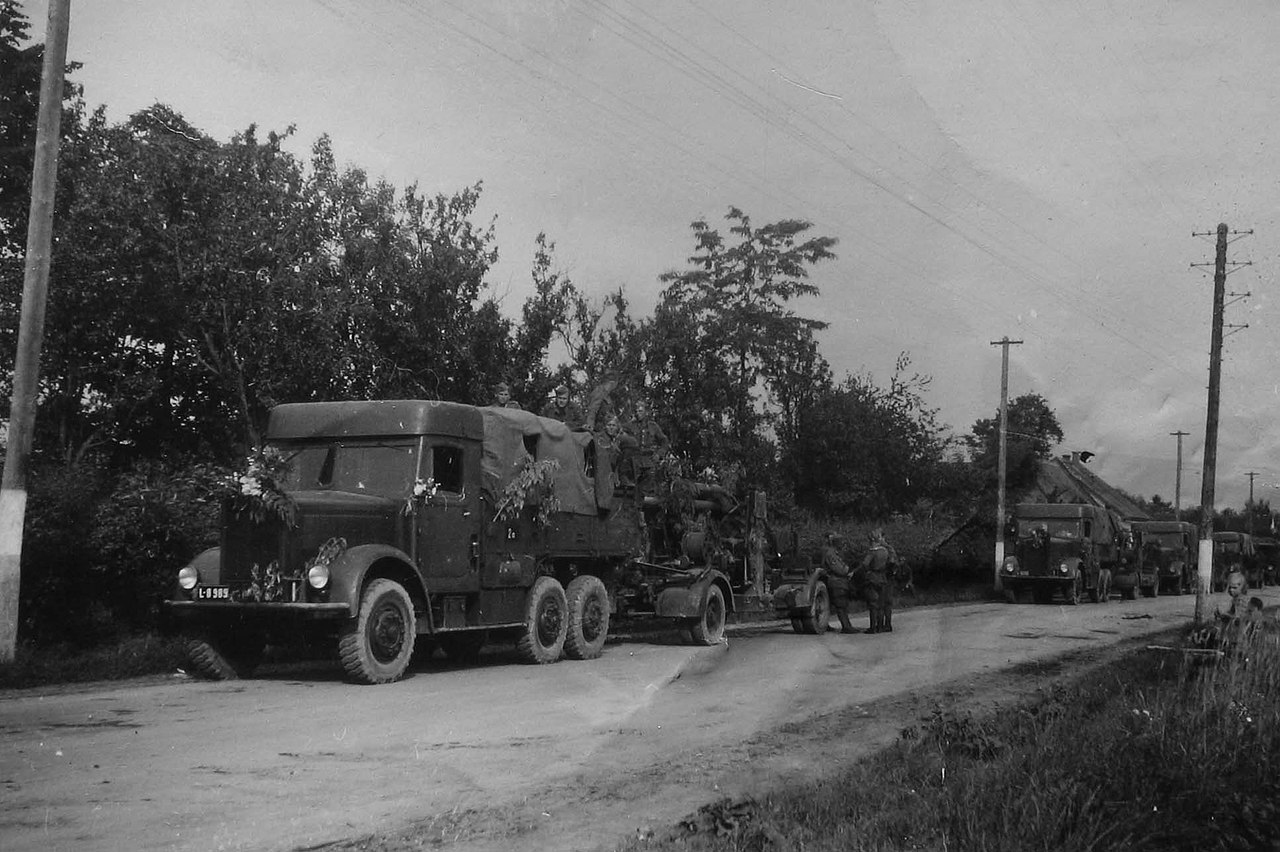
Resistance against Axis powers in World War II.
Slovakia
Military
6 min read
Updated By: History Editorial Network (HEN)
Published:
The Slovak National Uprising emerged as a significant resistance movement against the Axis powers during World War II. Originating within Slovakia, this uprising was a response to the country's occupation and its forced alliance with Nazi Germany. The local resistance included a diverse alliance of Slovak partisans, elements of the Slovak army, and civilian volunteers, coordinating their efforts to overthrow the collaborationist Slovak government and combat the occupying forces.
As Axis powers tightened their grip on Europe, Slovakia faced increasing pressure. Dissidents within the country began organizing covertly, fueled by a mixture of national pride, desire for self-determination, and opposition to fascism. Intense dissatisfaction brewed, leading various resistance groups to join forces under a unified command structure. Preparations included the accumulation of weapons, recruitment of fighters, and establishing secret communication networks.
The uprising commenced with an armed insurgency, targeting key locations to destabilize the Axis hold. Among its early significant actions was the capture of the strategic town of Banská Bystrica, which subsequently served as the uprising's logistical and administrative center. The movement gained initial momentum, drawing thousands to its cause and resulting in some early victories. However, the German military soon retaliated with overwhelming force, employing regular troops, paramilitary units, and heavy weaponry to suppress the revolt.
Despite the brutal suppression, the Slovak National Uprising managed to disrupt Axis operations and divert their resources, bravely holding out for nearly two months. Casualty figures from this conflict are significant: estimates suggest thousands of partisans and civilians were killed or injured, while many more were imprisoned or deported. The resistance ultimately retreated to mountainous regions, continuing guerrilla warfare tactics against the occupiers.
The Uprising’s legacy is multifaceted. It exemplifies the intense local resistance to Axis oppression and underscored the Slovak people’s quest for freedom and justice. Additionally, it inspired subsequent resistance activities within the broader context of World War II and contributed to the weakening of Axis control in Eastern Europe. The events also highlighted the importance of unity and collaboration among disparate groups facing a common enemy. Today, it stands as an essential chapter in Slovak history and a symbol of resilience and defiance.
#SlovakUprising #ResistanceMovement #AxisPowers #WorldWarII #Slovakia #MoofLife

Explore the Life Moments of
 AI Twin