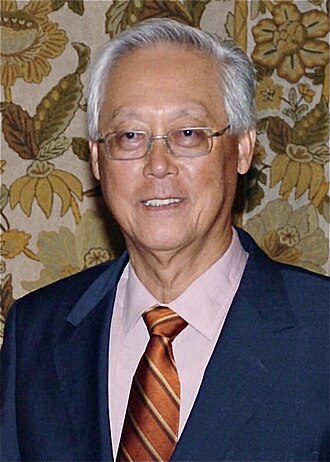
Lee Hsien Loong replaces Goh Chok Tong as Singapore's Prime Minister
Singapore
Political
Leadership Transition
4 min read
Updated By: History Editorial Network (HEN)
Published:
After serving as Singapore’s Prime Minister for 14 years, Goh Chok Tong handed over the leadership to Lee Hsien Loong, who was chosen as his successor by the ruling People's Action Party. Lee Hsien Loong had an extensive background in politics, having held various ministerial positions before becoming Prime Minister. His father, Lee Kuan Yew, was the founding Prime Minister of Singapore, adding to the weight of expectations on his shoulders.
Lee Hsien Loong's succession marked a generational shift in Singaporean leadership and was seen as a continuation of the country's stability and development. Under his leadership, Singapore continued to focus on economic growth, social stability, and technological advancements. Lee Hsien Loong emphasized the importance of maintaining Singapore's position as a global hub for finance, trade, and technology.
During his tenure, Lee Hsien Loong faced challenges such as an aging population, income inequality, and the need to diversify the economy. He implemented policies to address these issues, including investing in education and skills training, promoting innovation and entrepreneurship, and enhancing social welfare programs.
Lee Hsien Loong's leadership style was characterized by pragmatism, strategic thinking, and a commitment to long-term planning. He maintained Singapore's reputation as a clean and efficient government, while also promoting multiculturalism and social harmony among the diverse population.
Overall, Lee Hsien Loong's succession as Prime Minister of Singapore marked a significant moment in the country's history. His leadership brought continuity and stability, while also addressing the challenges and opportunities facing Singapore in the 21st century. #LeeHsienLoong #SingaporePrimeMinister #Succession #LeadershipTransition

Explore the Life Moments of
 AI Twin