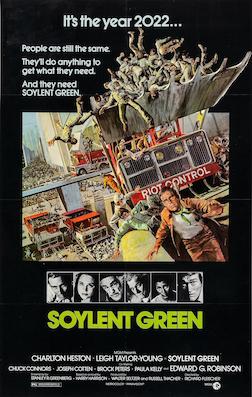
Soylent Green
Film
Science Fiction
Dystopia
4 min read
Updated By: History Editorial Network (HEN)
Published:
Updated:
Soylent Green presents a dystopian future characterized by overpopulation, environmental degradation, and resource scarcity. Set in a world where the population has surged to unsustainable levels, the film depicts a society grappling with severe food shortages. The government produces a synthetic food product called Soylent Green, marketed as a nutritious solution to hunger. However, the film gradually reveals the dark truth behind this food source, which is derived from the deceased, raising ethical questions about survival and humanity's moral compass. The narrative follows a police detective investigating the murder of a Soylent Green executive, leading him to uncover the shocking reality of the food's origins. This revelation serves as a critique of societal complacency and the lengths to which people will go to survive in dire circumstances.
The impact of Soylent Green extends beyond its plot, as it reflects real-world concerns about environmental sustainability and the consequences of unchecked population growth. The film has been noted for its prescient themes, resonating with contemporary issues such as climate change and food security. It has influenced popular culture and sparked discussions about the ethical implications of food production and consumption. The phrase 'Soylent Green is people' has entered the lexicon as a metaphor for the dehumanization and commodification of life in a resource-scarce world. The film's portrayal of a bleak future serves as a cautionary tale, urging viewers to consider the potential consequences of current societal trends.
#mooflife
#MomentOfLife
#SoylentGreen
#DystopianFuture
#ScienceFiction
#EnvironmentalIssues
#FoodSecurity

Explore the Life Moments of
 AI Twin