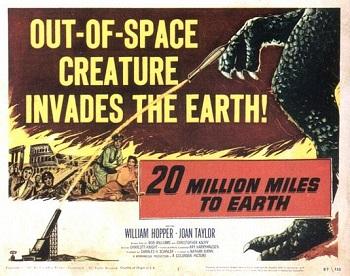
20 Million Miles to Earth
Science Fiction
Film History
Special Effects
4 min read
Updated By: History Editorial Network (HEN)
Published:
Updated:
20 Million Miles to Earth is a notable science fiction film that emerged during a period when the genre was experiencing a transformation, moving from low-budget B movies to productions with larger budgets and more impressive special effects. The film is particularly recognized for its groundbreaking visual effects created by Ray Harryhausen, a pioneer in the field of stop-motion animation. Harryhausen's work in this film contributed significantly to the overall impact of the narrative, which revolves around a creature from Venus that wreaks havoc after being brought to Earth. The film's special effects were a key factor in its appeal, showcasing the advancements in cinematic technology and storytelling that were becoming more prevalent in the science fiction genre at the time.
The release of 20 Million Miles to Earth also reflects the broader cultural fascination with space exploration and extraterrestrial life that characterized the mid-20th century. This period saw a surge in interest in science fiction films, as audiences were captivated by the possibilities of space travel and the unknown. The film's narrative and visual style influenced subsequent works in the genre, establishing a template for future science fiction films that sought to blend imaginative storytelling with innovative special effects. The legacy of 20 Million Miles to Earth can be seen in its impact on both the film industry and popular culture, as it helped to elevate the status of science fiction films and paved the way for more ambitious projects in the years to come.
#mooflife
#MomentOfLife
#20MillionMilesToEarth
#RayHarryhausen
#ScienceFictionFilm
#SpecialEffects
#CinematicHistory

Explore the Life Moments of
 AI Twin