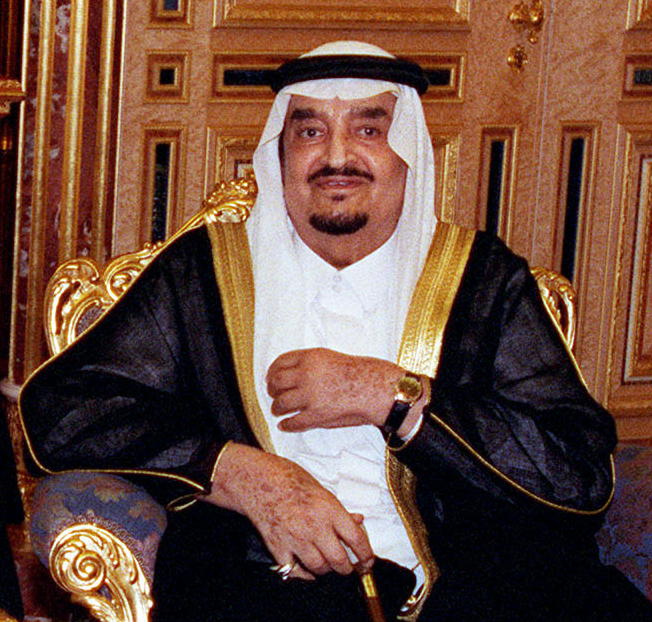
King Fahd: Accession to the Throne
Saudi Arabia
Political
Economic Downturn
4 min read
Updated By: History Editorial Network (HEN)
Published:
In 1982, King Fahd ascended to the throne of Saudi Arabia following the death of his brother, King Khalid. This transition in leadership marked a pivotal moment for the kingdom, as King Fahd was known for his modernization efforts and ambitious vision for the country's development.
King Fahd's accession brought about several significant changes in Saudi Arabia. He implemented economic reforms aimed at diversifying the country's oil-dependent economy, investing in infrastructure projects, and expanding the role of the private sector. Additionally, he played a key role in strengthening Saudi Arabia's position on the global stage, notably through his leadership during the Gulf War in 1990.
During his reign, King Fahd also prioritized social issues, including education and healthcare. He established numerous universities and healthcare facilities across the kingdom, contributing to improved standards of living for Saudi citizens. Moreover, he focused on maintaining stability in the region, particularly in the face of regional conflicts and geopolitical challenges.
The reign of King Fahd saw Saudi Arabia solidify its position as a key player in the Middle East, with the country playing a crucial role in regional diplomacy and energy markets. His leadership style emphasized pragmatism and consensus-building, enabling him to navigate complex political landscapes both domestically and internationally.
Overall, King Fahd's accession to the throne in 1982 marked a turning point in Saudi Arabia's history, ushering in a period of significant growth and modernization for the kingdom.
#KingFahd #SaudiArabia #Modernization #EconomicReforms #Leadership

Explore the Life Moments of
 AI Twin