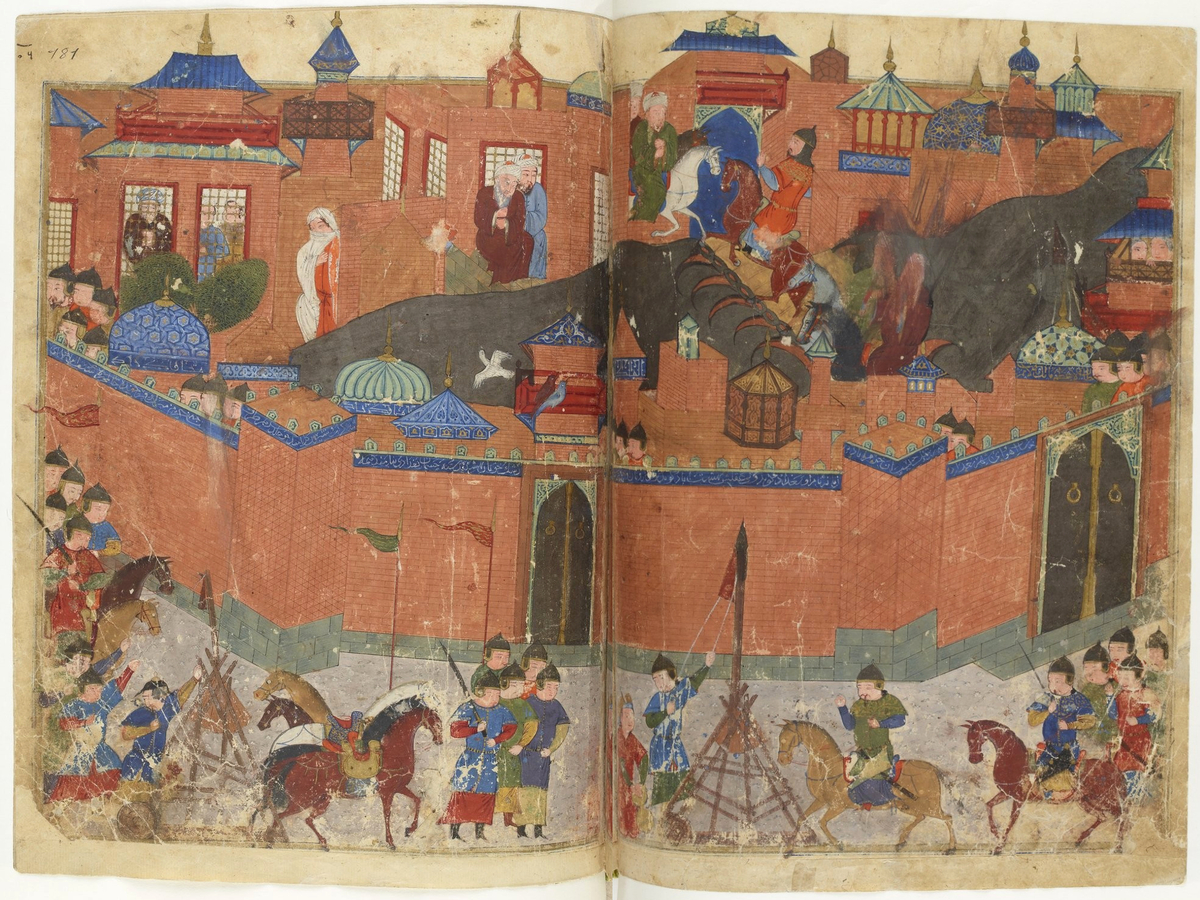
Fall of Abbasid Caliphate: Mongol Siege's Impact on Arabian Peninsula
Saudi Arabia
Global Trade
3 min read
Updated By: History Editorial Network (HEN)
Published:
The Siege of Baghdad by the Mongol Ilkhanate marked the culmination of a series of invasions across the Islamic world. Led by Hulagu Khan, the Mongols aimed to conquer the Abbasid Caliphate, which had ruled over a vast empire for centuries. The siege, lasting for weeks, resulted in the fall of Baghdad, bringing an end to the Abbasid Caliphate's reign.
The impact of the Siege of Baghdad was profound, as it led to widespread destruction of the city, including the renowned House of Wisdom library. Countless precious manuscripts were lost, and the intellectual heritage of the Islamic world suffered a severe blow. The political landscape of the region was also altered significantly, with the Abbasid Caliphate collapsing and making way for Mongol rule.
The Arabian Peninsula, including present-day Saudi Arabia, felt the repercussions of the Siege of Baghdad. Trade routes were disrupted, and political alliances were reshaped in the aftermath of the event. The power vacuum left by the fall of the Abbasid Caliphate created opportunities for local rulers to assert their authority, shaping the future dynamics of the region.
The Siege of Baghdad by the Mongol Ilkhanate remains a key moment in history, symbolizing the end of an era for the Abbasid Caliphate. The event's impact reverberated across the Arabian Peninsula and beyond, leaving a lasting legacy that would influence the region for years to come. #SiegeofBaghdad #MongolIlkhanate #AbbasidCaliphate #ArabianPeninsula

Explore the Life Moments of
 AI Twin