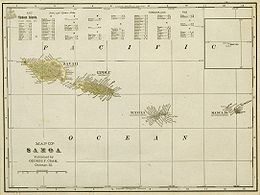
Tripartite Convention divides Samoan islands between major powers in strategic Pacific move.
Samoa
Political
Global Trade
4 min read
Updated By: History Editorial Network (HEN)
Published:
Updated:
The Tripartite Convention was held in Washington, D.C., to address the ongoing disputes over the Samoan archipelago between Germany, the United States, and the United Kingdom. The convention aimed to establish clear boundaries and spheres of influence to avoid further conflict. The agreement led to the division of the Samoan islands into two distinct entities. Germany assumed control of the western islands, known as Western Samoa (present-day Samoa), while the United States took over the eastern islands, now known as American Samoa.
This division was influenced by earlier treaties and informal agreements where European powers and the United States tried to extend their influence in the Pacific region. The arrangement facilitated more organized administration and exploitation of resources in the respective zones. This pivotal redistribution significantly altered the political landscape of the region, demonstrating the strategic interests of the involved powers in controlling territories within the Pacific for economic and military advantages.
The negotiations also reflected the era's geopolitical strategies, where colonial desires often overrode indigenous governance and autonomy. The local Samoan populations found themselves subject to foreign rule, adapting to new political and administrative systems imposed by the occupying nations. Historical records indicate that the convention helped stabilize international relations in the Pacific context but also underscored the ongoing trend of colonial appropriation.
#TripartiteConvention #SamoanHistory #ColonialEra #AmericanSamoa #WesternSamoa #PacificIslands #MoofLife
Primary Reference
History of Samoa - Wikipedia
Explore the Life Moments of
 AI Twin