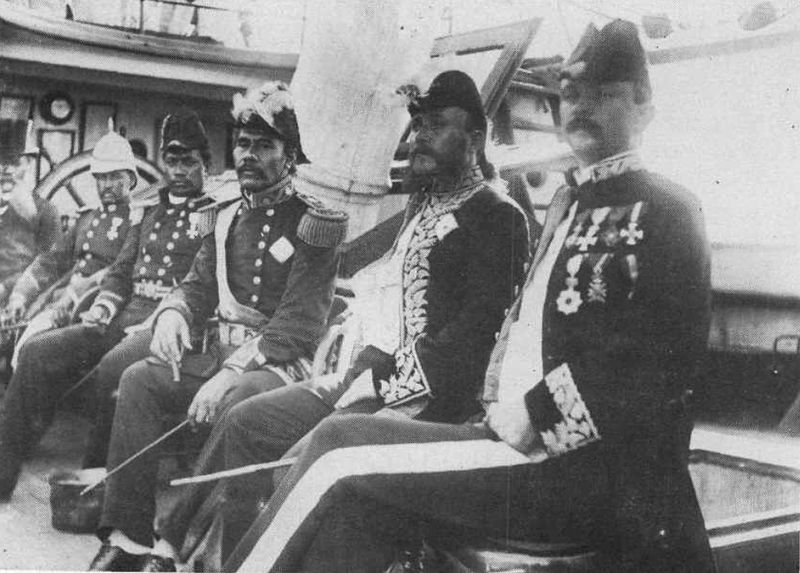
The First Samoan Civil War: Local rivalries, foreign interventions, and societal upheaval in Samoa.
Samoa
Political
Global Trade
4 min read
Updated By: History Editorial Network (HEN)
Published:
Updated:
The First Samoan Civil War involved battles between rival factions in Samoa, each vying for control over the islands. The conflict was chiefly driven by local Samoan leaders contesting for kingship. External influences also played significant roles, as Western powers, notably Germany, the United States, and the United Kingdom, intermittently intervened. The geopolitical interests of these powers revolved around establishing colonial and strategic dominance in the Pacific region.
Interim treaties and peace agreements were attempted but largely failed due to the underlying volatility and persistent external interference. These foreign interventions complicated the dynamics among Samoan factions, leading to oscillating phases of peace and conflict. The European powers, driven by commercial and strategic interests, often backed different local leaders, thus exacerbating internal divisions.
The war led to significant upheavals in Samoan society, impacting the societal structure and traditional governance. It also disrupted the daily lives of many Samoans, causing displacements and economic hardships. Casualty figures remain debated, but it's acknowledged that there were considerable losses on all sides, both from combat and subsequent conflicts nurtured by the war's outcomes.
This period marked the beginning of heightened Western influence in Samoa, setting the stage for future conflicts and shifts in power dynamics. The persistence of foreign interests would continue to shape the archipelago's political landscape beyond the initial conflict.
#SamoanCivilWar #ColonialImpact #PacificHistory #Geopolitics #MoofLife
Primary Reference
Full text of "Bismarck, Europe, and Africa The Berlin Africa ...
Explore the Life Moments of
 AI Twin