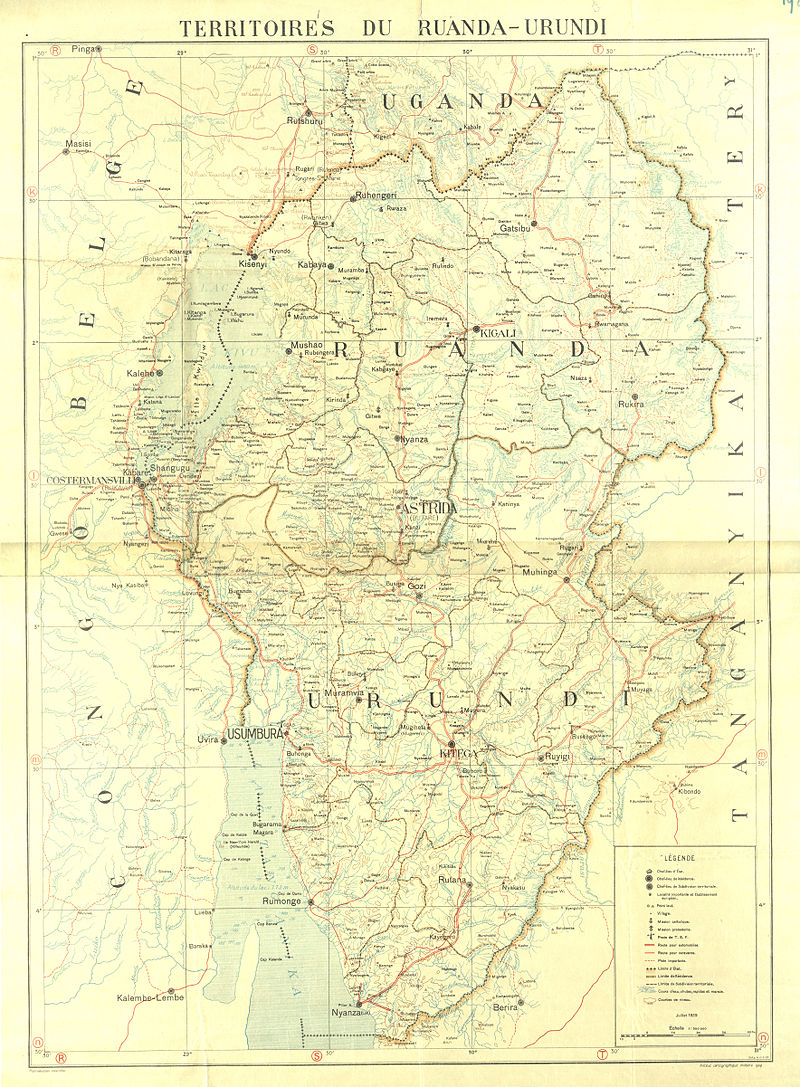
Rwanda-Urundi Becomes a League of Nations Mandate Under Belgium
Rwanda

Political
Sustainability
LeagueOfNations
Economy
3 min read
Updated By: History Editorial Network (HEN)
Published:
Updated:
In 1922, the territories of Rwanda and Burundi were formally joined as a League of Nations mandate known as Rwanda-Urundi, placed under Belgian administration. This political arrangement followed Germany’s defeat in World War I (1914–1918), which led to the loss of its colonial territories, including German East Africa (present-day Rwanda, Burundi, and Tanzania).
Under the League of Nations system, these territories were transferred to the victorious Allied powers. Belgium was granted administrative control over Rwanda-Urundi, while Britain took control of Tanganyika (modern-day Tanzania).
The Belgian administration maintained many of the indirect rule policies previously established by the Germans, relying on the existing Rwandan monarchy and local chiefs. However, the Belgians further entrenched the division between the Hutu and Tutsi populations, introducing identity cards that classified individuals based on ethnicity. This policy exacerbated ethnic tensions, which would later contribute to Rwanda’s political instability and the 1994 Genocide against the Tutsi.
The League of Nations mandate over Rwanda-Urundi lasted until 1946, when it was reclassified as a United Nations Trust Territory, still under Belgian control, until the territories gained independence in the early 1960s.
#MomentsOfLife #MoofLife_Moment #MoofLife
Primary Reference
Ruanda-Urundi

Explore the Life Moments of
 AI Twin